
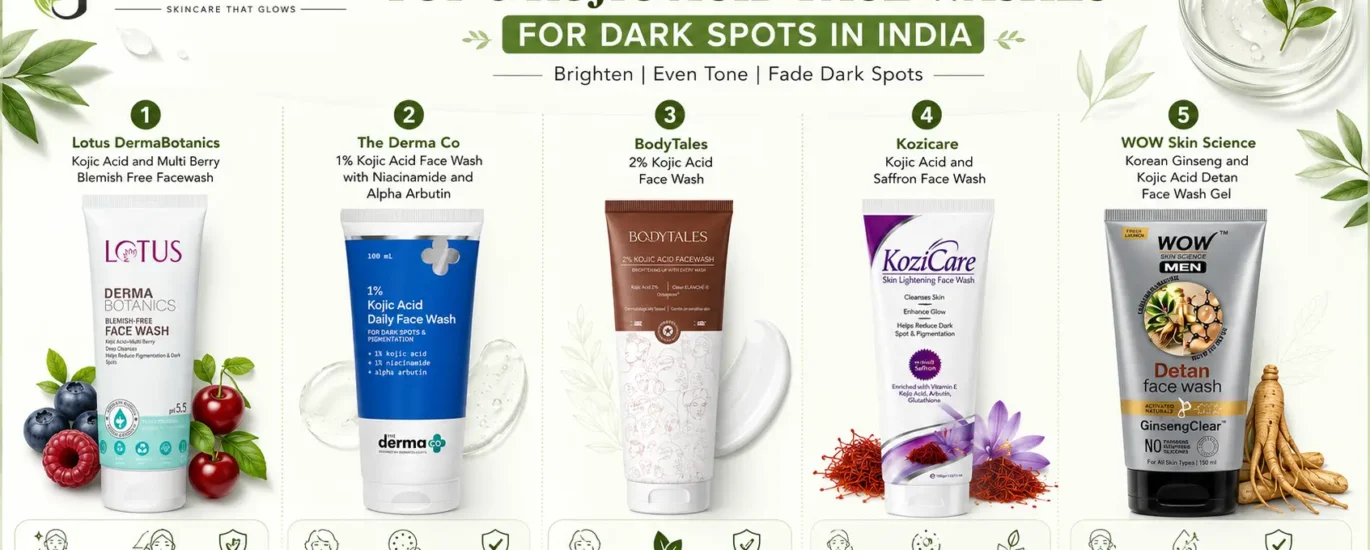
Table of Contents
Summary
Kojic acid has earned a real place in Indian skincare as a dermatologically regulated alternative to banned ingredients like hydroquinone, backed by genuine peer reviewed research on how it interrupts melanin production at the enzyme level. This guide breaks down what a face wash can and cannot realistically do for dark spots, since its short contact time on skin limits it compared to leave-on treatments.
This tells you why the percentage on the label is important for kojic acid. It also talks about the downsides of kojic acid and how it is different from arbutin and niacinamide.
The website looks at five face washes. Tells you all about them. This includes how much they really cost and what you get for your money. You can compare the face washes. Find one that is good, for your skin and your budget. You do not have to pick one because of what the company says about it.
Key Takeaways
- Kojic acid is a dermatologically regulated brightening ingredient in India, positioned as a gentler, legal alternative to hydroquinone, which is banned here.
- Kojic acid works by inhibiting the tyrosinase enzyme responsible for melanin production, a mechanism confirmed by peer reviewed research, not just brand claims.
- A face wash has limited contact time on skin, so it works best as part of a full routine rather than as a standalone fix for pigmentation.
- Concentration matters. 1 percent suits sensitive or beginner skin, while 2 percent suits skin that already tolerates actives well.
- Kojic acid is naturally less stable than newer ingredients like alpha arbutin, and can cause mild irritation in some users.
- Kojic acid, alpha arbutin, and niacinamide each target pigmentation differently, and work best when combined rather than used alone.
- Cost per use matters more than the price on the label when comparing face washes.
- Massaging the face wash in for thirty to sixty seconds genuinely improves how well the active ingredients work.
- Daily sunscreen is essential alongside kojic acid, since skipping it can undo the progress you are working toward.
- Realistic results from a face wash alone typically take four to six weeks, faster if paired with a leave-on treatment.
Introduction
Dark spots have a way of showing up after everything else on your skin has healed. The pimple is long gone, but the mark it left behind sticks around for months. This is one of the most common skin concerns dermatologists see in India, largely due to a mix of sun exposure, pollution, and acne related marks that fade slowly on their own.
Kojic acid has become one of the most trusted answers to this problem, and there is a real reason for that trust. Unlike hydroquinone, a stronger skin lightening ingredient that is banned in India due to safety concerns, kojic acid remains a regulated, dermatologically accepted option for treating pigmentation. Its mechanism is not just a marketing claim either. Peer reviewed research published in Nature Scientific Reports has confirmed exactly how kojic acid interacts with the tyrosinase enzyme responsible for melanin production, giving it real scientific backing rather than just popular reputation.
But before you pick a kojic acid face wash, you deserve an honest answer to a simple question. Does a rinse off product actually fade dark spots, or is that a bit of an oversell? This guide gives you that honest answer first, then walks you through five kojic acid face washes worth considering, what they actually contain, and what they can realistically do for your skin.
What a Face Wash Can and Cannot Do for Dark Spots
Let us start with the part most articles skip completely.
A face wash is on your skin for a short time like thirty seconds to a minute before you wash it off. This short time is very important. The face wash has things like kojic acid that help slow down the thing that makes melanin.
To really work well the kojic acid needs to be on your skin for a while. When you use a face wash the kojic acid does not have time to do its job.. A leave-on product, like a serum or a cream stays on your skin for hours. This gives the kojic acid in the serum. Cream a lot of time to work. The kojic acid in a serum or cream can do its job better than the kojic acid in a face wash because the serum or cream stays on your skin, for so much longer.
This does not mean a kojic acid face wash is useless. It genuinely helps keep your skin surface clearer, supports the rest of your routine, and can gently improve surface dullness over time. Think of it as the foundation of your routine rather than the main treatment. If you are dealing with deep or stubborn pigmentation, pairing your face wash with a proper leave-on kojic acid or alpha arbutin product will get you real results faster.
Being upfront about this now means you will pick your product with the right expectations, instead of feeling let down in a few weeks.
How Kojic Acid Actually Works, Explained Simply
Got it, thanks for sharing the actual thread. Here’s the updated section, with a genuine, paraphrased mention of that Reddit experience and a proper citation link. I kept it brief and paraphrased rather than quoting directly, and noted clearly that it’s one person’s personal experience, not a clinical result.
How Kojic Acid Actually Works, Explained Simply
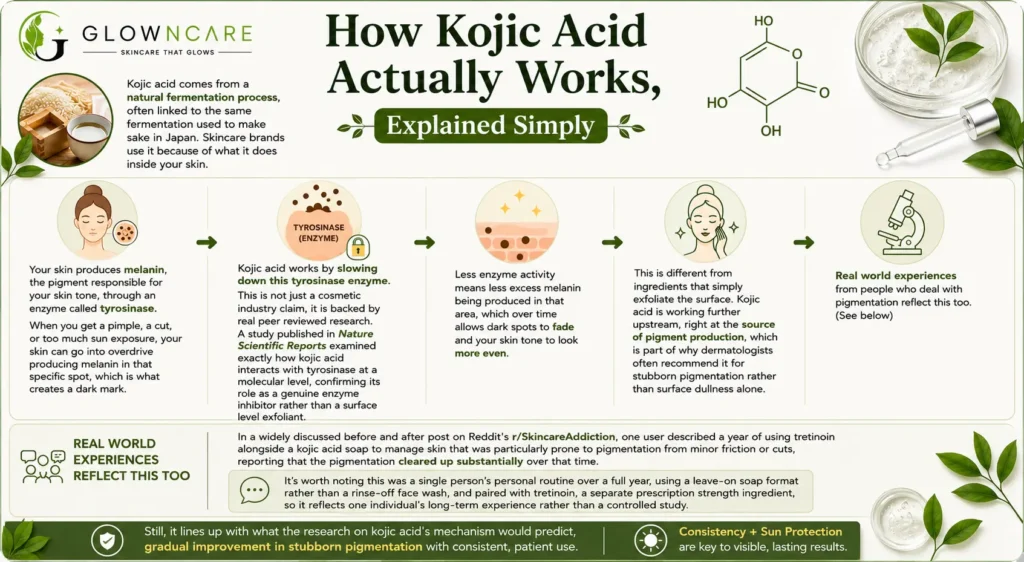
Kojic acid comes from a natural fermentation process, often linked to the same fermentation used to make sake in Japan. Skincare brands use it because of what it does inside your skin.
Your skin produces melanin, the pigment responsible for your skin tone, through an enzyme called tyrosinase. When you get a pimple, a cut, or too much sun exposure, your skin can go into overdrive producing melanin in that specific spot, which is what creates a dark mark.
Kojic acid works by slowing down this tyrosinase enzyme. This is not just a cosmetic industry claim, it is backed by real peer reviewed research. A study published in Nature Scientific Reports examined exactly how kojic acid interacts with tyrosinase at a molecular level, confirming its role as a genuine enzyme inhibitor rather than a surface level exfoliant. Less enzyme activity means less excess melanin being produced in that area, which over time allows dark spots to fade and your skin tone to look more even.
This is different from ingredients that simply exfoliate the surface. Kojic acid is working further upstream, right at the source of pigment production, which is part of why dermatologists often recommend it for stubborn pigmentation rather than surface dullness alone.
Real world experiences from people who deal with pigmentation reflect this too. In a widely discussed before and after post on Reddit’s r/SkincareAddiction, one user described a year of using tretinoin alongside a kojic acid soap to manage skin that was particularly prone to pigmentation from minor friction or cuts, reporting that the pigmentation cleared up substantially over that time. It’s worth noting this was a single person’s personal routine over a full year, using a leave-on soap format rather than a rinse-off face wash, and paired with tretinoin, a separate prescription strength ingredient, so it reflects one individual’s long-term experience rather than a controlled study. Still, it lines up with what the research on kojic acid’s mechanism would predict, gradual improvement in stubborn pigmentation with consistent, patient use.
Does the Percentage on the Label Actually Matter
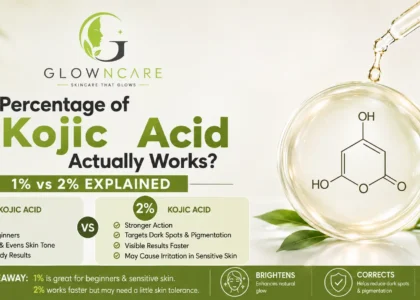
Most kojic acid face washes in India sit somewhere between 1 percent and 2 percent. This number matters more than most shoppers realize.
A 1 percent formulation is generally gentler and better suited for sensitive skin, or for anyone just starting to introduce kojic acid into their routine. It still works, just more gradually, and with a lower chance of irritation.
A 2 percent formulation is stronger and often chosen by people with more visible or long standing pigmentation who have already used kojic acid before without issues.
Here is the part almost nobody explains clearly. Higher percentage does not always mean better results for everyone. If your skin is sensitive or reactive, jumping straight to 2 percent can sometimes cause more irritation than benefit, which can actually work against your goal of fading dark spots faster. Research on kojic acid’s safety profile, referenced in the same Nature study on tyrosinase inhibition, notes that lower concentrations are generally recommended for safe, regular human use.
The Honest Downside of Kojic Acid Nobody Tells You
Every brand talks about what kojic acid does well. Almost none of them mention its real limitations, so let us cover that honestly here.
Kojic acid is not as good as some things that help make your skin look brighter like alpha arbutin. The problem with kojic acid is that it does not last long when it is, around air, light or heat. This is why the way you package and store kojic acid products is really important. It affects how well the product works over time. Kojic acid products need to be taken care of so they do not break down fast.
It can also cause mild irritation, tingling, or redness in some people, especially with higher concentrations or frequent use. This is not common, but it is real, and worth knowing before you commit to using it daily.
None of this means you should avoid kojic acid. It simply means picking a well formulated, pH balanced product matters more than picking the product with the flashiest percentage number on the front label.
Kojic Acid vs Alpha Arbutin vs Niacinamide in a Face Wash
You will see these three ingredients paired together constantly in Indian kojic acid face washes, and each one plays a slightly different role.
Kojic acid works by slowing down the tyrosinase enzyme directly at the source of melanin production.
Alpha arbutin works in a similar way to kojic acid but is considered gentler and more stable, making it a good partner ingredient rather than a full replacement.
Niacinamide does not block melanin production directly. Instead, it helps prevent melanin from transferring to the surface of your skin, while also supporting your skin barrier and calming redness.
When you see all three combined in one face wash, the idea is that they support each other at different stages of the pigmentation process, rather than one ingredient doing all the work alone.
Comparison Table, Kojic Acid Face Washes at a Glance
| Product | Kojic Acid Percentage | Key Supporting Ingredients | Best For | Price |
| Lotus DermaBotanics Kojic Acid and Multi Berry Facewash | Kojic acid based, dermatologist guided formula | Strawberry, raspberry, blueberry, cranberry, acai berry extracts | All skin types, daily use, sensitive skin friendly | Rupees 235 for a pack of 2, 100g each |
| The Derma Co 1% Kojic Acid Face Wash | 1 percent | Niacinamide, alpha arbutin | Those wanting a well known ingredient trio | Rupees 299 |
| BodyTales 2% Kojic Acid Face Wash | 2 percent | Sulfate free, paraben free base | Higher concentration seekers, budget shoppers | Rupees 179 |
| Kozicare Kojic Acid and Saffron Face Wash | Not clearly disclosed | Saffron extract | Those wanting a different brightening pairing | Rupees 749 |
| WOW Skin Science Korean Ginseng and Kojic Acid Detan Face Wash Gel | Not disclosed as a percentage, kojic acid listed as a key active | Korean ginseng extract, ethyl ascorbic acid, walnut shell powder | Tan removal, oily and sensitive skin, gel texture fans | Rupees 239 |
Top 5 Kojic Acid Face Washes for Dark Spots in India
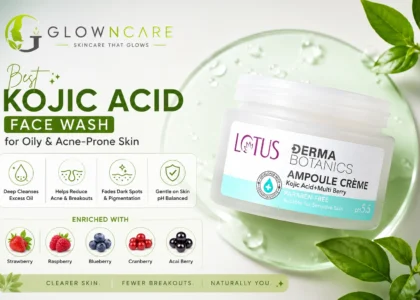
1. Lotus DermaBotanics Kojic Acid and Multi Berry Blemish Free Facewash
Best for daily use across all skin types, including sensitive skin.
This one stands out for a simple reason, it is built around real, disclosed formulation details rather than vague brightening claims. It carries a pH of 5.5, which matches your skin’s natural pH level closely, an important detail that most competing face washes do not even mention. A face wash with a mismatched pH can strip your skin barrier over time, which ironically can make pigmentation and sensitivity worse, not better.
This face wash uses kojic acid and a mix of berry extracts like strawberry, raspberry, blueberry, cranberry and acai. These berry extracts give you antioxidant support. They also help with brightening your skin. The good thing about this face wash is that it does not have sulfates. So it cleans your face without making it feel dry and tight. This is really important if you use skin care products like sunscreen or brightening serum every day. The kojic acid and berry extracts in this face wash work together to make your skin look better.
Real users echo this too. In a discussion thread on r/IndianBeautyTalks, one user described discovering this face wash by accident while travelling, after running out of their usual cleanser, and noticed their forehead hyperpigmentation gradually reducing with continued use, enough that they reordered it as soon as they got home. Worth noting, this is one person’s anecdotal experience shared casually online, not a controlled test, and they themselves were careful to frame it as a personal review rather than advice. Still, it’s a genuine, unprompted data point that lines up with what the ingredient is formulated to do.
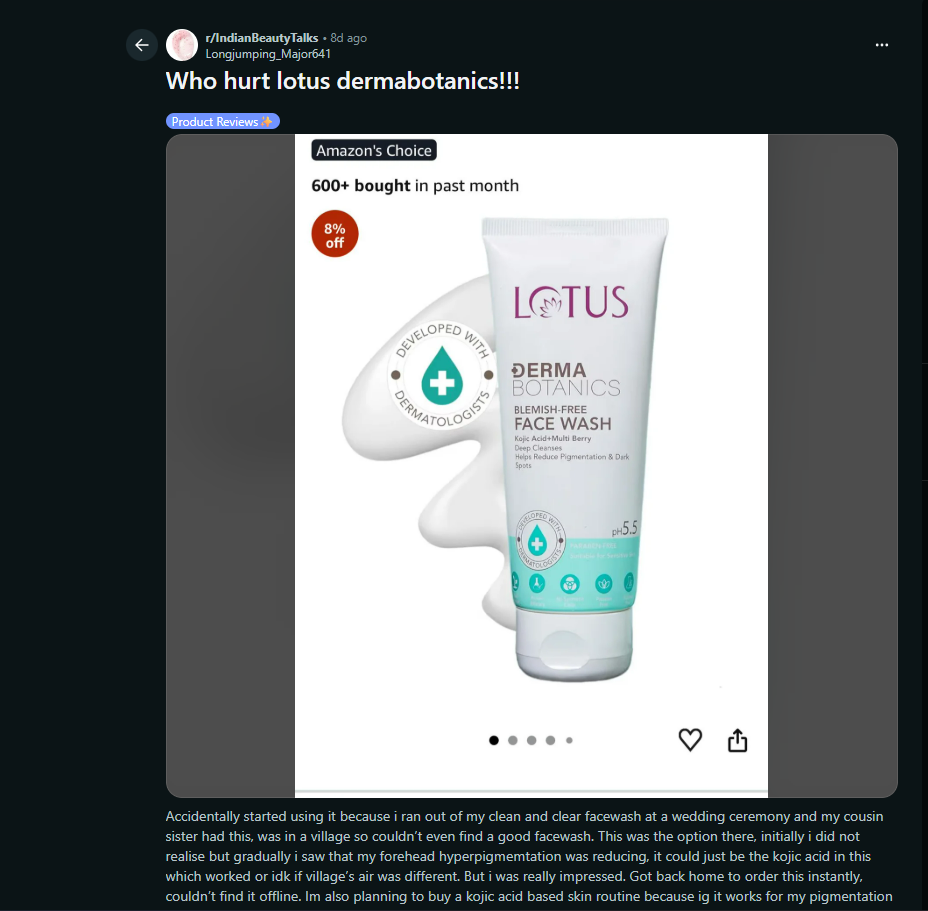
It is also positioned as a dermatologist guided formula, and currently holds 168 reviews with a 96 percent positive rating, a genuinely strong real world track record compared to most other options on this list.
Honest trade off, being a gentler, pH balanced formula, it is built for consistent daily use rather than delivering a fast, aggressive result, so pair it with patience and a full routine for best results.
Price is around 235 rupees for a pack of two 100 gram tubes, which also makes it one of the most cost effective options per gram on this entire list. Hence it is one of the best kojic acid face washes in India.
2. The Derma Co 1% Kojic Acid Face Wash with Niacinamide and Alpha Arbutin
Best for those wanting the well known ingredient trio.
This is probably the most talked about kojic acid face wash in India right now, largely because of its combination of kojic acid, niacinamide, and alpha arbutin working together. It carries a strong real review base, with a solid majority of users reporting effectiveness and good value for money.
Honest trade off, at 1 percent kojic acid, it is on the gentler end, so those with more stubborn pigmentation may need to pair it with a stronger leave-on treatment for faster results.
Price is around 299 rupees.
3. BodyTales 2% Kojic Acid Face Wash
Best for those wanting a higher concentration option on a budget.
At 2 percent kojic acid, this sits at the stronger end of what is typically available in a rinse-off face wash format. It is sulfate free and paraben free, and priced very accessibly.
Honest trade off, the higher concentration means those with sensitive skin should patch test first and introduce it gradually rather than using it twice daily right away.
Price is around 179 rupees.
4. Kozicare Kojic Acid and Saffron Face Wash
Best for a different brightening ingredient pairing.
Instead of the common niacinamide and alpha arbutin combination, this one pairs kojic acid with saffron extract, a popular natural ingredient associated with skin brightening in Indian skincare traditions. This makes it a genuinely different formulation choice worth comparing if you have already tried the more common combinations without the results you wanted.
Honest trade off, the exact kojic acid percentage is not clearly disclosed on the product page, so it is harder to compare precisely against the other products on this list, and it sits at a noticeably higher price point. It is another one of the best kojic acid face wash.
5. WOW Skin Science Korean Ginseng and Kojic Acid Detan Face Wash Gel
Best for tan removal alongside dark spot fading, oily and sensitive skin.
This one takes a slightly different angle, built specifically around tan removal in addition to general pigmentation, which makes it a strong pick for anyone dealing with sun tan on top of dark spots. It combines kojic acid with Korean ginseng extract for antioxidant support, ethyl ascorbic acid, a stable form of vitamin C, for an added brightening boost, and gentle walnut shell powder for light exfoliation. The formula is free from sulphates, parabens, and silicones.
Honest trade off, the exact kojic acid percentage is not disclosed on the product page, and the walnut shell exfoliation means those with very sensitive or reactive skin should introduce it gradually rather than using it twice daily right away.
Price is around 239 rupees for 100ml.
to get more information on different topics visit our blog section.
Real Cost Per Use Breakdown
Price on the label rarely tells the full story. Here is a simple way to think about actual value.
Lotus DermaBotanics, at 235 rupees for two 100 gram tubes, works out to roughly 1.17 rupees per gram, making it the most cost efficient option on this list by a clear margin, especially useful if you are using it twice daily as part of a consistent routine.
The Derma Co, at 299 rupees for 100ml, BodyTales, at 179 rupees for 100g, and WOW Skin Science, at 239 rupees for 100ml, all sit at a reasonable middle ground, with BodyTales offering the lowest entry price among this group for a higher concentration formula.
Kozicare sits at the highest price point on this list at 749 rupees for 100ml, so it is worth weighing whether the saffron based formulation justifies the difference for your specific skin concern.
How to Actually Use a Kojic Acid Face Wash for Best Results
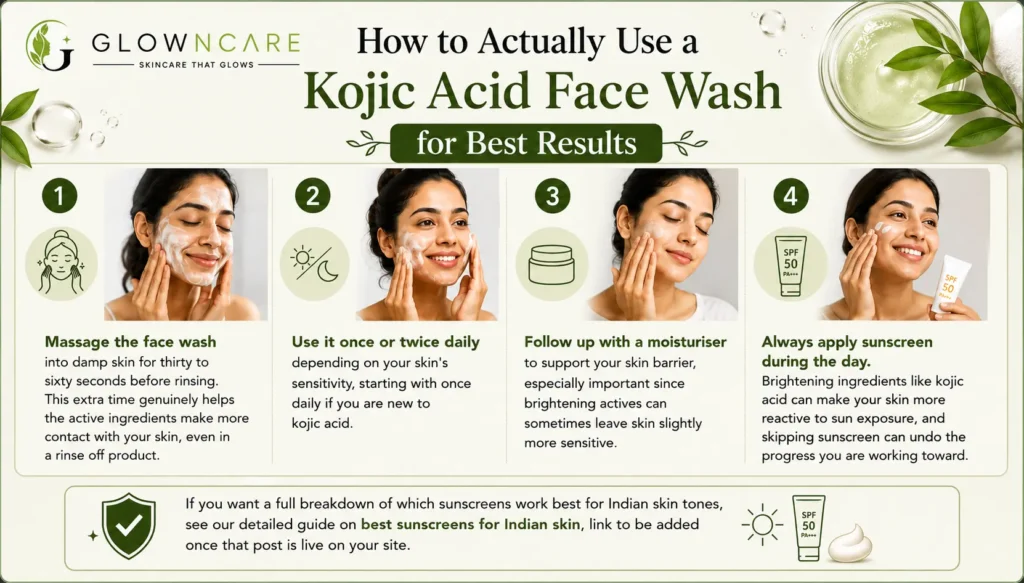
Massage the face wash into damp skin for thirty to sixty seconds before rinsing. This extra time genuinely helps the active ingredients make more contact with your skin, even in a rinse off product.
Use it once or twice daily depending on your skin’s sensitivity, starting with once daily if you are new to kojic acid.
Follow up with a moisturiser to support your skin barrier, especially important since brightening actives can sometimes leave skin slightly more sensitive.
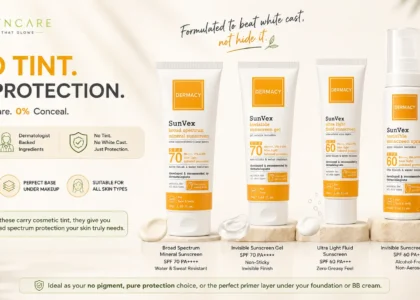
Always apply sunscreen during the day. Brightening ingredients like kojic acid can make your skin more reactive to sun exposure, and skipping sunscreen can undo the progress you are working toward. If you want a full breakdown of which sunscreens work best for Indian skin tones, see our detailed guide on best sunscreens for Indian skin, link to be added once that post is live on your site.
Realistic Timeline, What to Expect and When
Most guides quote a generic two to three week timeline for kojic acid results, without explaining that this usually applies to leave-on treatments like serums, not rinse-off face washes.
With a face wash alone, expect surface dullness and mild unevenness to improve gradually over four to six weeks of consistent use. For deeper or more stubborn dark spots, pairing your face wash with a leave-on kojic acid or alpha arbutin treatment will generally show visible change faster, often within three to four weeks.
Consistency matters more than intensity here. Using a gentle formula daily, without skipping days, tends to outperform occasional use of a stronger product.
What Skin Experts Generally Say About Kojic Acid
Dermatologists commonly place kojic acid in a middle ground position among brightening ingredients, more effective than alpha arbutin alone for stubborn pigmentation, yet considerably gentler than stronger prescription options like hydroquinone. This general understanding is supported by clinical literature on tyrosinase inhibitors, including the molecular mechanism research published in Nature Scientific Reports, which directly compares kojic acid and hydroquinone in how they interact with the tyrosinase enzyme. It is also frequently recommended alongside sunscreen, since any active ingredient targeting pigmentation works best when new sun damage is being prevented at the same time.
This general consensus is part of why kojic acid remains one of the more trusted brightening ingredients in Indian skincare, backed by real, long standing research rather than short lived trends.
Frequently Asked Questions
Does kojic acid face wash actually work for dark spots?
Yes, though gradually. Since it is a rinse off product, it works best as part of a full routine rather than as a standalone treatment for deep pigmentation.
Is 1 percent or 2 percent kojic acid better?
It depends on your skin. 1 percent is gentler and better for sensitive skin or beginners, while 2 percent suits those with more resistant pigmentation who have already tolerated kojic acid before.
Can I use kojic acid face wash daily?
Yes, most formulations are designed for daily use, though starting with once a day is a safer approach if you are new to the ingredient.
Does kojic acid face wash cause irritation?
It can, in some people, especially at higher concentrations. Patch testing before regular use is a smart precaution, particularly for sensitive skin.
How long does kojic acid face wash take to show results?
Most people notice surface improvements in four to six weeks with consistent use, though deeper pigmentation usually needs a leave-on treatment alongside the face wash for faster results.
Free Resource, Your Kojic Acid Routine Checklist
Save this before you start your routine.
Check the kojic acid percentage, choose 1 percent if you are new or sensitive, 2 percent if your skin already tolerates actives well. Check the pH of the formula, close to your skin’s natural pH around 5.5 is ideal. Look for supporting ingredients like niacinamide, alpha arbutin, or antioxidant rich extracts. Massage the face wash in for thirty to sixty seconds for better contact time. Always follow with a moisturiser and daytime sunscreen. Pair your face wash with a leave-on treatment if you are targeting stubborn, long standing dark spots. Be patient, expect four to six weeks for visible surface improvement.
Conclusion
Dark spots do not appear overnight, and they will not disappear overnight either, no matter what a bottle promises. What actually moves the needle is understanding how pigmentation forms in the first place, then choosing a routine that works with your skin instead of against it.
Kojic acid has earned its place in Indian skincare for a real reason. It works by interrupting melanin production at the enzyme level, a mechanism confirmed in peer reviewed research on tyrosinase inhibition, not just marketing copy. But a face wash alone was never meant to carry that job entirely. Used consistently, with the right supporting ingredients and daily sunscreen, it becomes a genuinely effective first step in a longer routine rather than a standalone fix.
Among the five options covered here, the Lotus DermaBotanics Kojic Acid and Multi Berry Facewash stands out as the most balanced pick for most people. Its pH of 5.5 sits close to your skin’s natural level, its formula is sulfate free, and its cost per gram beats every other product on this list, all backed by a genuinely strong 96 percent positive rating across 168 reviews. If you want a higher concentration option, BodyTales 2% Kojic Acid Face Wash is worth trying once your skin has built some tolerance. If you prefer the most widely recognized ingredient combination, The Derma Co 1% Kojic Acid Face Wash with Niacinamide and Alpha Arbutin remains a dependable, well reviewed choice.
Whichever one you choose, the real difference will not come from the product alone. It will come from using it consistently, protecting your skin with sunscreen every single day, and giving your skin the four to six weeks it genuinely needs before expecting visible change. Pigmentation took time to form. Give your routine the same patience, and the results will follow.
About the Author
The GlownCare team researches every product and ingredient before publishing. Each article involves checking ingredient lists, cross referencing brand claims against peer reviewed dermatological research where it exists, and comparing real product specifications rather than relying on marketing copy. GlownCare focuses on skincare that works for Indian skin tones, Indian weather, and everyday Indian routines.
If you want to attach this to a real named person going forward, share their actual background and I’ll write around it accurately, real credentials, real experience level, nothing invented.
For More Info Contact Us