
Table of Contents
Summary
This guide breaks down what kojic acid actually does for oily and acne-prone skin – and, just as importantly, what it doesn’t do. Most articles online blur the line between “brightening” and “treating acne,” which leaves a lot of people disappointed when a kojic acid face wash doesn’t clear their breakouts the way a salicylic acid cleanser would. Here, we’ve separated the two clearly: kojic acid is a pigment-fading ingredient at its core, with some emerging (not fully proven) antibacterial and antifungal benefits on the side. We’ve also covered the 2024 EU and UK regulatory changes around kojic acid concentration limits, something almost no other guide mentions, along with practical advice on layering it safely, avoiding unnecessary irritation, and choosing between a face wash and a leave-on cream depending on your actual skin concern. Along the way, we looked closely at where a product like Lotus DermaBotanics Kojic Acid + Multi Berry Ampoule Crème fits into a realistic routine, and how it stacks up against other kojic acid creams on the market.
Everything here is written to help you make an informed choice, not to oversell one ingredient as a cure-all. Where a claim is based on research or regulatory data, we’ve pointed to where that information comes from, so you’re not just taking our word for it – you can verify it yourself.
Key Takeaways
- Kojic acid’s real job is blocking melanin production, not clearing active breakouts – it fades the marks acne leaves behind, but it isn’t a substitute for salicylic acid or benzoyl peroxide if you have active pimples right now.
- Its antibacterial and antifungal properties are real but still “emerging” in the research – worth knowing about, not worth building your whole acne routine around.
- A face wash gives kojic acid very little contact time on your skin, so for actual pigmentation results, pairing it with a leave-on product like a cream or serum matters more than most brands admit.
- Kojic acid can genuinely help with fungal acne (Malassezia folliculitis) thanks to its antifungal activity – a use case that barely gets talked about anywhere else.
- The EU and UK now cap kojic acid at 1% concentration in face and hand products as of 2024, following safety concerns raised around thyroid function – it’s not banned, just more tightly regulated than most people realize.
- Contact dermatitis (redness, itching, irritation) is the most commonly reported side effect, and it’s more likely at higher concentrations or on already-sensitive skin.
- Sunscreen isn’t optional with kojic acid – because it interferes with melanin, your skin can become more reactive to sun exposure while using it.
- What feels like “purging” after starting a kojic acid product is usually a reaction to another ingredient in the formula, not the kojic acid itself, since it doesn’t speed up cell turnover the way retinoids or AHAs do.
- Lotus DermaBotanics Kojic Acid + Multi Berry Ampoule Crème stands out for pairing kojic acid with anti-inflammatory and antiseptic berry extracts in a lightweight, oil-free base – a well-rounded pick for oily, sensitive, acne-prone skin, even though it doesn’t disclose its exact kojic acid percentage.
- The best results come from combining ingredients by purpose, not chasing one “best” product – salicylic acid for active breakouts, kojic acid plus niacinamide for marks and tone, and consistent sunscreen to protect whatever progress you make.
Introduction
Some people think different on how the kojic acid works, in this new social media trend where creators promotes it like if you have acne marks or you want the clear skin so you should focus on kojic acid, but it is real upto some extent but not that similar, and this is because people get disappointed after buying it, because they want it to work like a cleanser as they are too many articles for this to included in acne treatment or brightening.
I’ve dug through the actual research on how kojic acid works, what dermatologists say about it, and where it genuinely helps versus where it’s just being oversold. So this isn’t going to be another list dressed up as advice. This guide walks you through what kojic acid actually does for oily and acne-prone skin, what it flat out can’t do, the safety and regulation side nobody bothers explaining properly, how to actually pick and use a good product, and where a cream like Lotus DermaBotanics Kojic Acid + Multi Berry Ampoule Crème fits into the picture alongside your face wash. No hype, just what’s worth knowing before you spend your money.
What Kojic Acid Actually Is and How It Works
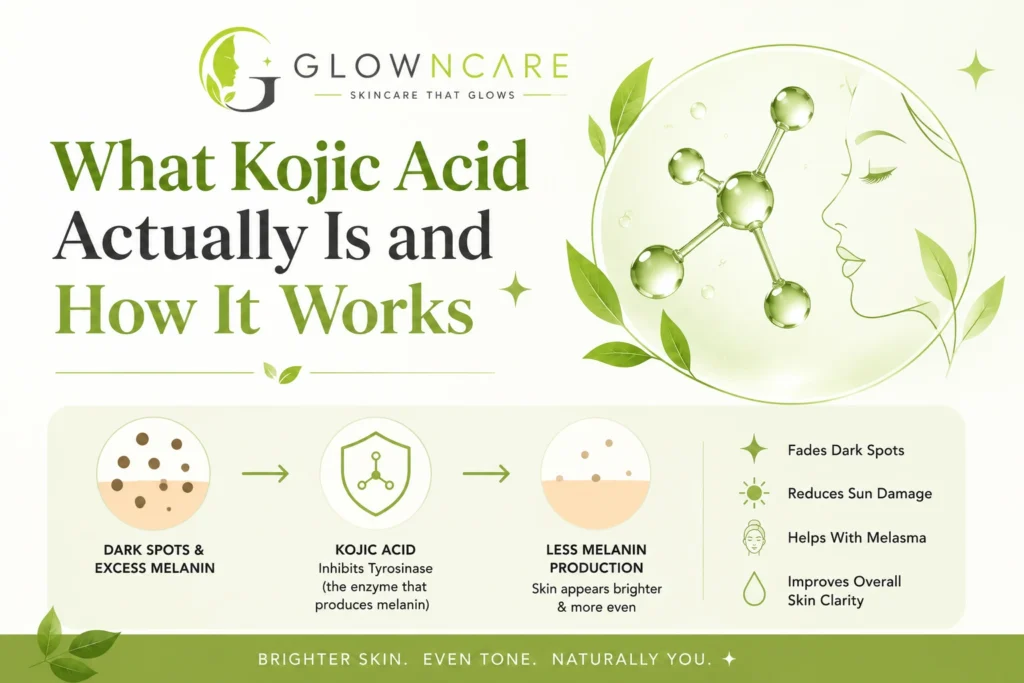
Kojic acid is a compound that comes out of the fermentation of certain fungi, most commonly Aspergillus oryzae, the same mold family used in soy sauce and sake production. In skincare, its main job is acting as a tyrosinase inhibitor – tyrosinase is the enzyme your skin uses to produce melanin. When kojic acid slows that enzyme down, your skin makes less new pigment, which is why it’s so widely used for dark spots, sun damage, melasma, and the stubborn brownish marks acne can leave behind.
What it isn’t is an exfoliant or a deep pore-cleansing acid in the way glycolic or salicylic acid are. It doesn’t dissolve oil or unclog follicles. Its whole mechanism is about pigment control, not oil control – which is the first thing you need to understand before picking a kojic acid product for oily or acne-prone skin.
Kojic Acid vs Other Brightening Ingredients
| Ingredient | Main Job | Best For |
| Kojic Acid | Blocks melanin production | Dark spots, pigmentation, post-acne marks |
| Niacinamide | Calms inflammation, strengthens barrier, controls oil | Redness, enlarged pores, oiliness |
| Vitamin C | Antioxidant + mild brightening | Dullness, early sun damage |
| Alpha Arbutin | Slower, gentler melanin inhibitor | Sensitive skin pigmentation |
Does Kojic Acid Actually Help With Acne, or Just the Marks It Leaves Behind?
Here’s the honest answer most brand blogs won’t give you because it doesn’t help them sell their kojic acid product: kojic acid is not a frontline acne treatment. If you have active, inflamed breakouts, an ingredient like salicylic acid is going to do far more for you. Salicylic acid is generally considered the stronger option for oily skin that’s prone to breakouts, while kojic acid mainly works on fading dark spots rather than treating the acne itself. Zeelab Pharmacy
That said, kojic acid isn’t useless for acne-prone skin either. It has documented antibacterial and antifungal activity, including against organisms like Staphylococcus aureus and Candida albicans, giving it some potential to interfere with acne-causing bacteria or fungal triggers when it’s properly formulated. There’s also emerging research pointing to a possible role in acne management thanks to antibacterial activity against the bacteria involved in acne, along with anti-inflammatory effects that may calm redness. ClinikallyNumber Analytics
Notice the word “emerging” there – that’s an important distinction. This isn’t settled, clinically proven acne-fighting science the way benzoyl peroxide or salicylic acid research is. It’s a supporting benefit, not the main event. If you’re choosing between products, think of kojic acid as the ingredient that handles what’s left over after the breakout – the dark mark, the shadow, the uneven patch – rather than the thing stopping the pimple from forming in the first place.
Kojic Acid for Fungal Acne
This is a genuinely underused angle. If what you’re calling “acne” is actually small, itchy, uniform bumps that don’t respond to typical acne treatments, you might be dealing with fungal acne (Malassezia folliculitis) rather than bacterial acne. Since kojic acid shows antifungal activity, it can be a reasonable addition to a fungal-acne-safe routine – something almost no mainstream kojic acid article mentions, even though it’s a real and common source of frustration for people who feel like “nothing works.”
Real Benefits of Kojic Acid Face Wash for Oily, Acne-Prone Skin
- Gradually fades post-acne dark marks and patchy pigmentation
- Helps even out the tone left behind by old breakouts and sun exposure
- Mild antibacterial and antifungal support alongside your main acne treatment
- Works well layered with oil-control ingredients like niacinamide
- Non-drying formulas exist that won’t strip an already-irritated barrier
- Can be used long-term as a maintenance step once active breakouts calm down
Wait – Does a Face Wash Even Deliver Enough Kojic Acid to Work?
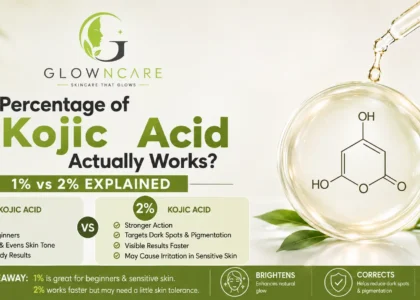
This is the question almost nobody asks, and it matters. A face wash sits on your skin for maybe 30-60 seconds before you rinse it off. Kojic acid needs contact time with the skin to meaningfully inhibit tyrosinase – that’s how leave-on serums and creams built with kojic acid tend to outperform cleansers for actual pigmentation results.
That doesn’t make a kojic acid face wash pointless. Think of it as a light, cumulative “priming” step rather than your main treatment. It’s genuinely useful for gentle daily brightening and prepping the skin, but if pigmentation or acne marks are your real concern, pairing your face wash with a leave-on product is where you’ll see the bigger difference. This is exactly where a cream comes into the routine.
Best Kojic Acid Face Washes for Oily and Acne-Prone Skin
| Product | Kojic Acid % | Key Co-Actives | Best For |
| Bake 2% Kojic Acid + Alpha Arbutin Face Wash | 2% | Alpha Arbutin, Niacinamide | Daily brightening without heavy exfoliation |
| Bodytales 2% Kojic Acid Face Wash | 2% | – | Budget-friendly tan and dark spot fading |
| The Derma Co Kojic Acid Face Wash | 1% | Niacinamide, Alpha Arbutin | Non-drying, all skin types |
| Skinolin Kojic Acid Foaming Cleanser | Blended | Salicylic Acid, Niacinamide, Rose Water | Oily skin that also wants light oil control |
| Kojie San Skin Brightening Cleanser + Toner | Blended | Hydromoist system | Combined cleanse-and-tone step |
Skinolin’s version is worth a special mention for acne-prone oily skin specifically, since it’s one of the few kojic face washes that actually pairs the ingredient with salicylic acid for pore purification alongside the brightening action, rather than relying on kojic acid alone to do a job it isn’t built for.
Pairing Your Face Wash With a Leave-On Cream: Where Lotus DermaBotanics Comes In
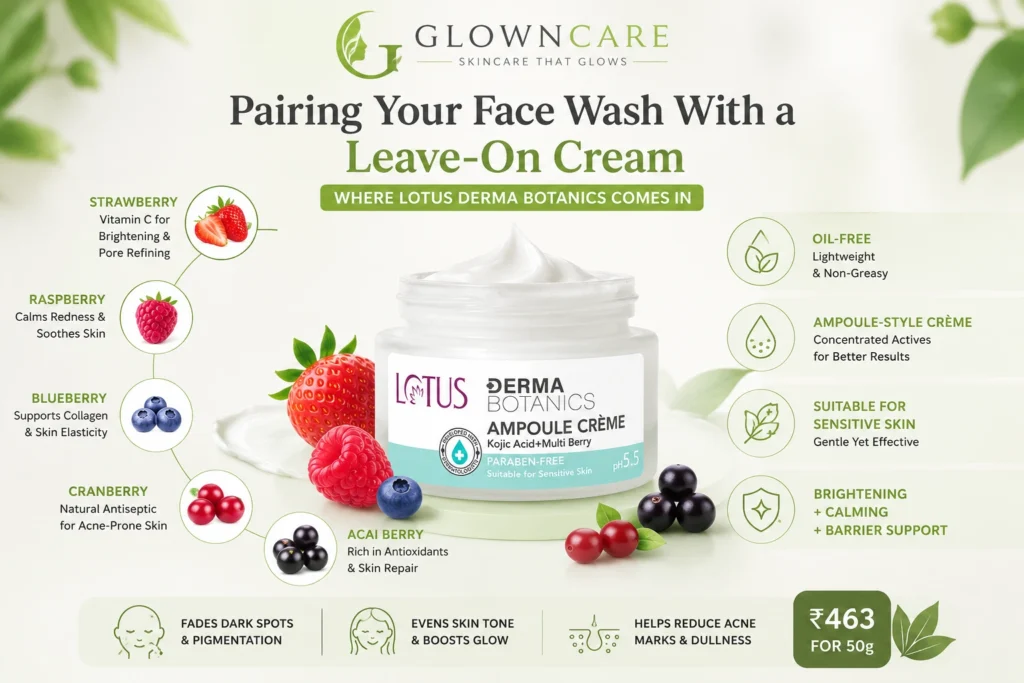
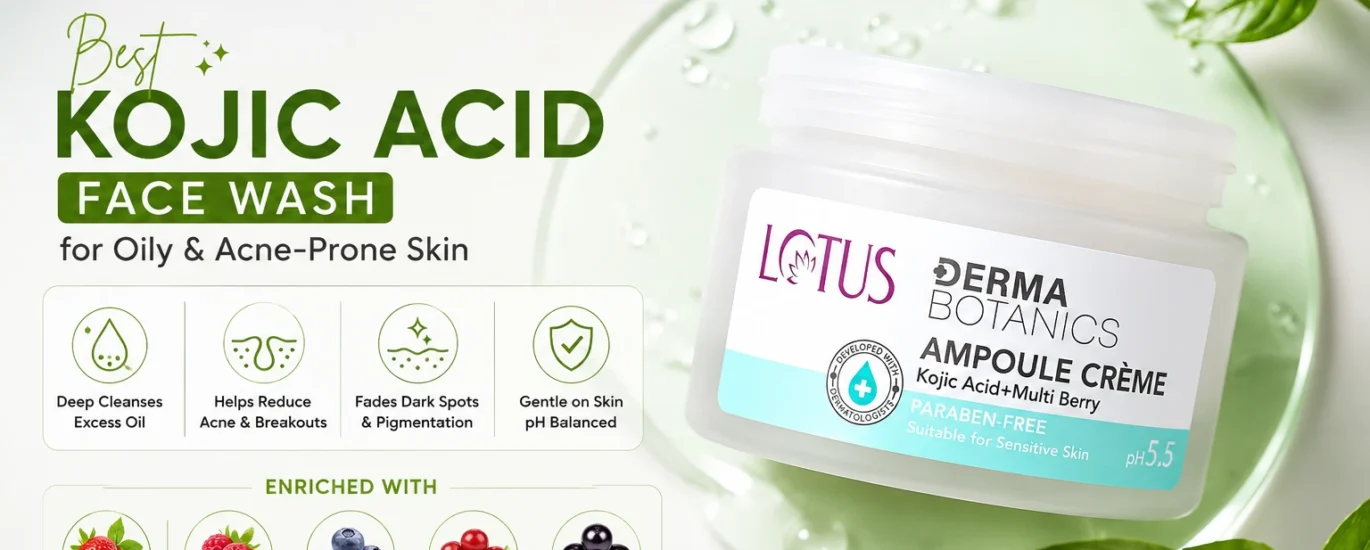
Since a face wash alone gives kojic acid limited time on your skin, the smarter move for oily, acne-prone skin dealing with marks and dullness is to follow up with a leave-on product. This is the gap the Lotus DermaBotanics Kojic Acid + Multi Berry Ampoule Crème fills nicely, and it’s worth a proper look rather than a quick mention.
What makes this one interesting isn’t just the kojic acid – it’s the multi-berry blend layered around it. Strawberry extract brings extra vitamin C for brightening and helps refine the look of pores, which matters a lot on oily skin. Raspberry extract carries anti-inflammatory properties that help calm redness, which is genuinely relevant if your acne-prone skin tends to react easily. Blueberry extract supports collagen, cranberry extract offers a natural antiseptic quality that’s useful for acne-prone skin specifically, and acai berry rounds it out with skin-repairing antioxidant support.
It’s formulated as an oil-free, ampoule-style crème, meaning it’s built to deliver a concentrated hit of actives without the heavy, greasy feel that a lot of brightening creams have – something oily-skin users usually have to compromise on. It’s also positioned for sensitive skin, so it’s a reasonable option even if you’ve had irritation from stronger kojic acid formulas before. At roughly ₹463 for 50g, it sits in an accessible mid-range price bracket compared to a lot of imported or clinic-brand kojic acid creams.
One thing to flag honestly: the product doesn’t disclose its exact kojic acid percentage, which some ingredient-focused buyers may want to know before purchasing. If you want a precisely labelled percentage for tracking results, that’s worth keeping in mind. What it does offer instead is a more rounded formula – brightening plus calming plus barrier support – rather than a single-note kojic acid product.
How Lotus DermaBotanics Compares to Other Kojic Acid Creams
| Product | Kojic Acid % | Key Co-Actives | Best For | Approx. Price |
| Lotus DermaBotanics Kojic Acid + Multi Berry Ampoule Crème | Not disclosed | Multi-berry complex, Vitamin C | Oily, sensitive, acne-prone skin wanting brightening + calming in one step | ₹463 (50g) |
| The Derma Co 2% Kojic Acid Face Serum | 2% | Niacinamide, Alpha Arbutin | Stronger, more targeted pigmentation correction | ₹500–600 |
| Bodytales 2% Kojic Acid Serum Cream | 2% | – | Straightforward budget dark spot fading | ₹300–400 |
| Gluta-C Kojic Plus+ | Blended | Glutathione | Overall tone brightening | Varies |
| Kojie San Soap | Blended | Papaya extract | Body and face tan removal | Budget |
If your priority is the highest labelled kojic acid percentage on paper, The Derma Co’s serum edges ahead. But if you want a product that treats acne-prone, oily, sensitive skin as one combined problem rather than isolating pigmentation alone, the Lotus DermaBotanics cream’s added anti-inflammatory and antiseptic berry actives make it a more complete pick for exactly the skin type this guide is about.
Is Kojic Acid Actually Safe? What the 2024 EU and UK Regulations Mean
This part gets left out of almost every kojic acid article, and it shouldn’t be. In 2021 and 2022, the EU’s Scientific Committee on Consumer Safety reviewed kojic acid and flagged possible risks at higher exposure levels, particularly around thyroid function and potential endocrine-disrupting effects. Based on that review, the European Commission capped kojic acid at a maximum of 1% in face and hand products under Regulation (EU) 2024/996, and the UK followed with a matching update under SI 2024/1334. EuverifyEuverify
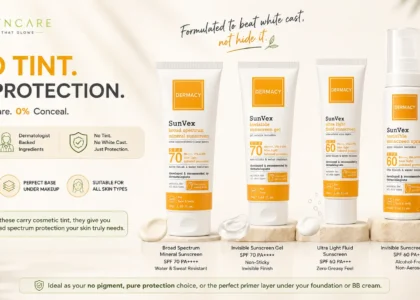
To be clear, kojic acid has not been banned. It’s simply more tightly regulated now than it used to be. In the US, the Cosmetic Ingredient Review panel has considered it safe at concentrations up to 1%, though the FDA still recommends buying from reputable brands since quality control varies. The most common downside reported is contact dermatitis, showing up as redness, irritation, itchiness or a mild rash, especially at higher concentrations or on already-sensitive skin. Because kojic acid interferes with pigment production, it can also make your skin more reactive to sun exposure, so daily sunscreen isn’t optional if you’re using it regularly. HealthlineHealthline
The practical takeaway for you as a shopper: check the labelled percentage where possible, don’t assume a higher number automatically means better or safer results, and treat sunscreen as a non-negotiable part of any kojic acid routine.
How to Use Kojic Acid Face Wash Without Triggering a Breakout
A few ground rules that most listicles skip entirely:
Introduce it gradually. Start with alternate-day use for the first couple of weeks rather than jumping straight to twice-daily application, especially if you have reactive or sensitive acne-prone skin.
Don’t stack it with other strong actives in the same routine. Layering kojic acid with something like a strong salicylic acid treatment or retinol in the same session increases irritation risk without adding much benefit. Space them out – one in the morning, one at night, or on alternating days.
Understand that “purging” isn’t really the right word here. Kojic acid doesn’t accelerate cell turnover the way retinoids or AHAs do, so it’s unlikely to cause a true purge. If you break out after starting a kojic acid product, it’s more likely a reaction to another ingredient in the formula – fragrance, a co-active, or simply a new product disrupting your routine – rather than kojic acid itself “pushing out” congestion.
Always follow with sunscreen during the day. This one bears repeating because it directly protects the results you’re trying to get.
A simple routine built around this guide would look like: cleanse with your kojic acid face wash, follow with the Lotus DermaBotanics cream (or another leave-on kojic product) at night, and finish mornings with a broad-spectrum sunscreen.
Kojic Acid vs Salicylic Acid vs Niacinamide: Which One Do You Actually Need
If you’re dealing with active, inflamed breakouts right now, salicylic acid or benzoyl peroxide should be your primary treatment – kojic acid isn’t built to stop a pimple mid-formation.
If your main concern is oily skin with post-acne dark marks and uneven tone, a kojic acid and niacinamide combination is a strong pairing – niacinamide handles oil and inflammation while kojic acid works on the pigment left behind.
If you suspect fungal acne rather than typical bacterial breakouts, kojic acid’s antifungal properties make it a reasonable ingredient to keep in a fungal-acne-safe routine, alongside other Malassezia-friendly products.
Frequently Asked Questions
Does kojic acid help with acne?
Not directly. It has some antibacterial and antifungal activity that may offer mild supporting benefits, but it’s primarily a pigmentation-fading ingredient, not an acne treatment.
Is kojic acid good for oily skin?
Yes, as part of a routine – it won’t control oil on its own, but it pairs well with oil-controlling ingredients like niacinamide or salicylic acid.
Can kojic acid cause breakouts or purging?
True purging is unlikely since it doesn’t speed up cell turnover. Any breakout after starting it is more likely a reaction to another ingredient in the formula.
How long does kojic acid take to show results?
Most people notice gradual fading of dark spots and marks over several weeks of consistent use, not overnight.
Is kojic acid banned in Europe?
No, it’s not banned, but the EU and UK now cap it at a maximum 1% concentration in face and hand products following a 2024 regulatory update.
Is kojic acid safe for daily use?
Generally yes, at appropriate concentrations, with sunscreen use during the day and gradual introduction for sensitive skin.
Is the Lotus DermaBotanics cream good for acne-prone skin?
It’s formulated for sensitive skin with anti-inflammatory and antiseptic berry extracts alongside kojic acid, making it a reasonable leave-on option for oily, acne-prone skin dealing with marks and dullness rather than active severe breakouts.
About the Author
We’re a small team of skincare writers and researchers who got tired of reading the same recycled advice on every skincare blog. Half of us have spent years messing with our own oily, acne-prone, reactive skin and testing way too many products before finding what actually works. The other half comes from a research and formulation background, so when we write about an ingredient like kojic acid, we’re not just repeating what the product packaging says.
Before anything goes up on GlowNCare, we dig into the actual studies, check what regulators like the EU or FDA are currently saying, and cut out whatever doesn’t hold up. If the science on something is still early or mixed, we say that instead of dressing it up to sound more impressive. We’d rather you trust one honest guide than read five that all sound confident and say nothing useful.
We’re not doctors, and nothing here replaces an actual visit to a dermatologist, especially if you’re dealing with something persistent or painful. Think of us as the friend who’s done the reading and tried the products, not a substitute for professional care.
Conclusion
Kojic acid isn’t a miracle ingredient, and this guide was never trying to sell it as one. For oily, acne-prone skin, it does one job well – fading the pigmentation and marks that breakouts leave behind – while the actual acne-fighting is better left to ingredients built for that, like salicylic acid or benzoyl peroxide. The mistake most people make isn’t picking the wrong product; it’s expecting one product to do a job it was never designed to do.
The routine that actually works is layered, not single-note: a kojic acid face wash like Skinolin’s or The Derma Co’s for daily brightening, a dedicated acne treatment for active breakouts, and a leave-on product like Lotus DermaBotanics Kojic Acid + Multi Berry Ampoule Crème to give the ingredient the contact time it actually needs to fade marks and even out tone – backed by calming, antiseptic berry actives suited to sensitive, acne-prone skin specifically. Add sunscreen every single day, introduce new actives slowly, and you’ll have a routine built around how kojic acid actually behaves, not what a product label promises.
If you’re dealing with something specific – stubborn pigmentation, cystic acne, or irritation that won’t settle – treat this guide as a starting point for making an informed choice, not a replacement for a dermatologist who can actually look at your skin. Patch test anything new for 24–48 hours before applying it to your face, and stop use if irritation shows up.
For More Info Contact Us.
Related Blog – https://glowncare.com/best-kojic-acid-face-washes-for-dark-spots-in-india/