
Table of Contents
Summary
White cast makes many Indians skip sunscreen, but the real reason lies in how mineral filters like zinc oxide sit on the skin. This guide breaks down why cast happens, what micronised actually means, and why a sunscreen can look clear in the morning but show cast again by afternoon.
We also talk about how the color of makeup looks different on people with wheatish skin, olive skin and deep skin tones which’s something that a lot of guides do not cover. The information we provide is based on what real dermatologists say and research from UCLA not what companies claim to sell their products.
We review five sunscreens in a honest way looking at the good and bad points of each one and calculating the real cost of using them so you can choose the one that is best, for your skin the amount of money you want to spend and how you live your daily life, not just the one that looks nice in a store.
Key Takeaways
- White cast mostly comes from mineral sunscreens, since zinc oxide and titanium dioxide sit on top of the skin instead of absorbing into it.
- Micronised particles reduce cast but do not guarantee zero cast on their own.
- Sunscreen can look clear in the morning and start showing cast again by afternoon due to sweat and oil breaking down the formula.
- Cast looks different across skin tones, wheatish, olive, and deep skin all react differently.
- Dermatologists recommend reapplying every three to four hours, since protection fades faster than most people expect.
- New UCLA research shows changing the shape of zinc oxide particles can cut white cast while keeping full SPF strength.
- Cost per use matters more than the price on the label when comparing sunscreens.
- Patting sunscreen in, instead of rubbing, helps it sit more evenly and reduces visible cast.
- Reapplying over makeup works best with alcohol free spray formulas, since alcohol based sprays can dry out the skin.
- The right sunscreen depends on your skin tone, skin type, and daily routine, not just the SPF number on the bottle.
Introduction
This post may contain affiliate links. If you buy through them, we may earn a small commission at no extra cost to you.
You could spend thousands of rupees on skincare, follow every viral routine on Instagram, and still struggle with dullness, acne, pigmentation, or sensitive skin. Surprisingly, the problem often isn’t your effort, it’s the products you’re using.
According to renowned dermatologist Dr. Whitney Bowe, healthy skin isn’t achieved by piling on more products. It’s about using formulations that protect your skin barrier while delivering ingredients your skin can actually absorb and benefit from.
This is a view shared by Dr. Shereene Idriss, who frequently explains that skincare is no longer just about trendy ingredients or attractive packaging. What truly matters is ingredient quality, formulation science, clinical testing, and consistency.
That raises an important question: if two products contain similar active ingredients, why does one deliver visible results while another barely makes a difference?
The answer lies in the science behind the formula, not just the ingredient list. From pharmaceutical-grade manufacturing and dermatologically tested formulations to skin-friendly pH levels and advanced delivery systems, every detail influences how well a product performs.
This is where Dermacy stands apart. Instead of following skincare trends, the brand focuses on evidence-backed formulations designed to support healthier skin over time. Every product is created with a balance of efficacy, safety, and everyday usability, helping people build routines they can actually trust rather than simply hope will work.
In this guide, we’ll explore what truly makes Dermacy different, the science behind its formulations, and why dermatologists increasingly emphasize formulation quality over marketing claims when recommending skincare.
Why Sunscreen Leaves a White Cast in the First Place
Most white cast comes from mineral sunscreens. These use two main ingredients, zinc oxide and titanium dioxide. Both sit on top of your skin instead of soaking into it. They work by physically reflecting UV rays away from your skin, almost like a tiny shield.
The problem is that these particles are naturally white. When they sit on your skin’s surface, they scatter light unevenly, and that scattering is what creates the white or grey tint you see, especially on medium to deep skin tones. Your skin is not the problem here. The particle size and formulation are.
Chemical sunscreens do things in a way. They have things like avobenzone or Tinosorb in them. These ingredients go into your skin. They change the UV rays into heat. Then this heat goes away safely. Because chemical sunscreens go into your skin of just staying on the surface they usually do not leave any white stuff behind. Chemical sunscreens like avobenzone or Tinosorb are really good, at this.
What Micronised Actually Means
You have probably seen the word micronised on sunscreen packaging, and most guides throw this word around without ever explaining it. Let us fix that.
Micronised simply means the zinc oxide or titanium dioxide particles have been broken down into much smaller sizes before being mixed into the formula. Smaller particles scatter light less harshly, which reduces the visible white tint. Some brands go a step further and use nano sized particles, which are even smaller and blend in even better.
Here is the part most sites skip. Just because a label says micronised does not automatically mean zero cast. If the rest of the formula is not balanced properly, or if too much mineral filter is packed in for a high SPF number, you can still see some tint. So micronised is a good sign, but it is not a guarantee by itself.
What Skin Experts Say About This
Dermatologists and cosmetologists who work with Indian skin regularly point out a few things that most sunscreen content misses.
According to Dr. Jatin Mittal, Cosmetologist at Abhivrit Aesthetics, a sunscreen’s real protection window is usually three to four hours, no matter how high the SPF number is. This means reapplying on time matters more than picking the highest SPF you can find.
Dr. Atul Taneja, Dermatologist at Apollo Gleneagles Hospitals, has explained that Indian skin, which mostly falls under Fitzpatrick skin types IV and V, naturally filters out a large share of incoming UV rays on its own. This is part of why even a small amount of white cast can look more noticeable here than it would on lighter skin tones, since the natural skin tone underneath is already doing some of the filtering work.
There is also real formulation research behind this problem, not just marketing claims. Researchers at UCLA have been studying how changing the physical shape of zinc oxide particles, from a round shape to a tetrapod shape, can reduce visible white cast while keeping the same level of SPF protection. This kind of research is exactly why newer sunscreen formulas are getting better at avoiding cast without lowering protection.
Mineral vs Chemical vs Hybrid Sunscreens, Explained Simply
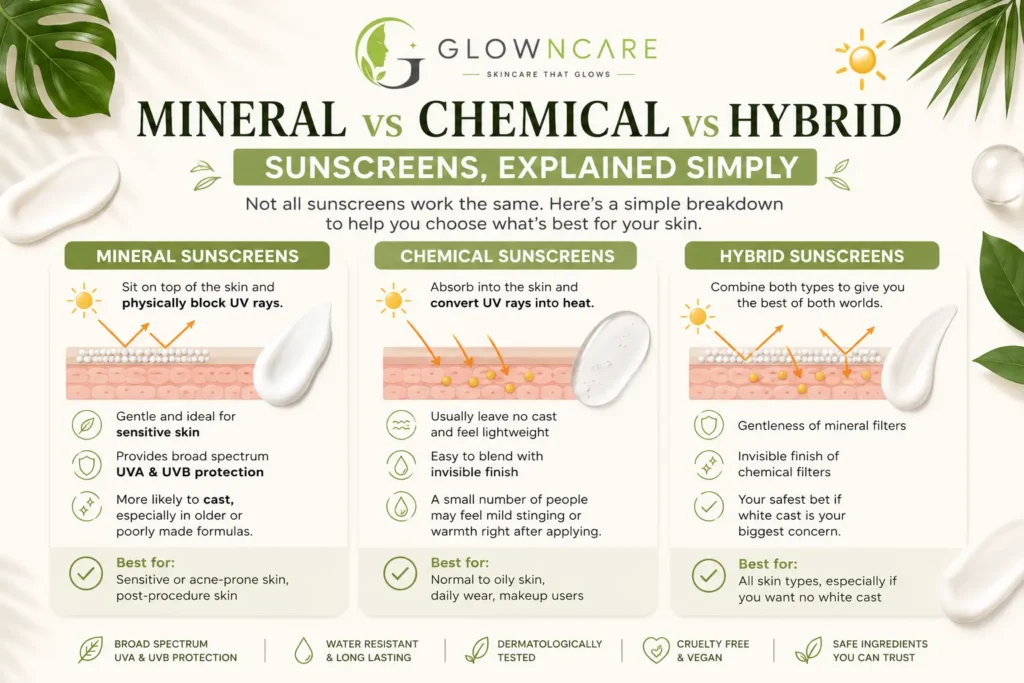
Mineral sunscreens sit on top of the skin and physically block UV rays. They are gentle and good for sensitive skin, but more likely to cast, especially in older or poorly made formulas.
Chemical sunscreens absorb into the skin and convert UV rays into heat. They usually leave no cast, but a small number of people feel mild stinging or warmth right after applying them.
Hybrid sunscreens combine both types. They aim to give you the gentleness of mineral filters along with the invisible finish of chemical filters. This is usually your safest bet if white cast is your biggest concern.
The Midday Cast Problem Nobody Talks About
Here is something almost no sunscreen guide mentions. A sunscreen can look perfectly clear when you apply it in the morning, and still start showing a white or ashy tint by early afternoon.
Why does this happen? Sweat, oil and humidity slowly break down the sunscreen film sitting on your skin through the day. As the formula shifts and moves with your skin’s natural oil, mineral particles can clump together in small areas, making the cast suddenly more visible, even though your face looked completely fine at 9 in the morning.
This is exactly why reapplying sunscreen matters so much in Indian weather. It is not just about topping up protection. It is also about refreshing the formula before it starts breaking down and casting later in the day.
Does Cast Look Different Across Skin Tones
Most articles lump every skin tone into one bucket called medium to deep. That is not accurate enough to be genuinely useful.
Wheatish skin tones usually notice a light greyish tint, most visible around the nose and forehead where oil builds up faster.
Olive skin tones often see a slightly ashy or dull finish rather than a bright white cast, since the underlying tone absorbs some of the contrast.
Deep skin tones usually see the most obvious white or chalky cast, since the contrast between skin tone and the white mineral particles is the strongest.
Knowing which category you fall into helps you choose a lighter, more suited formula instead of guessing.
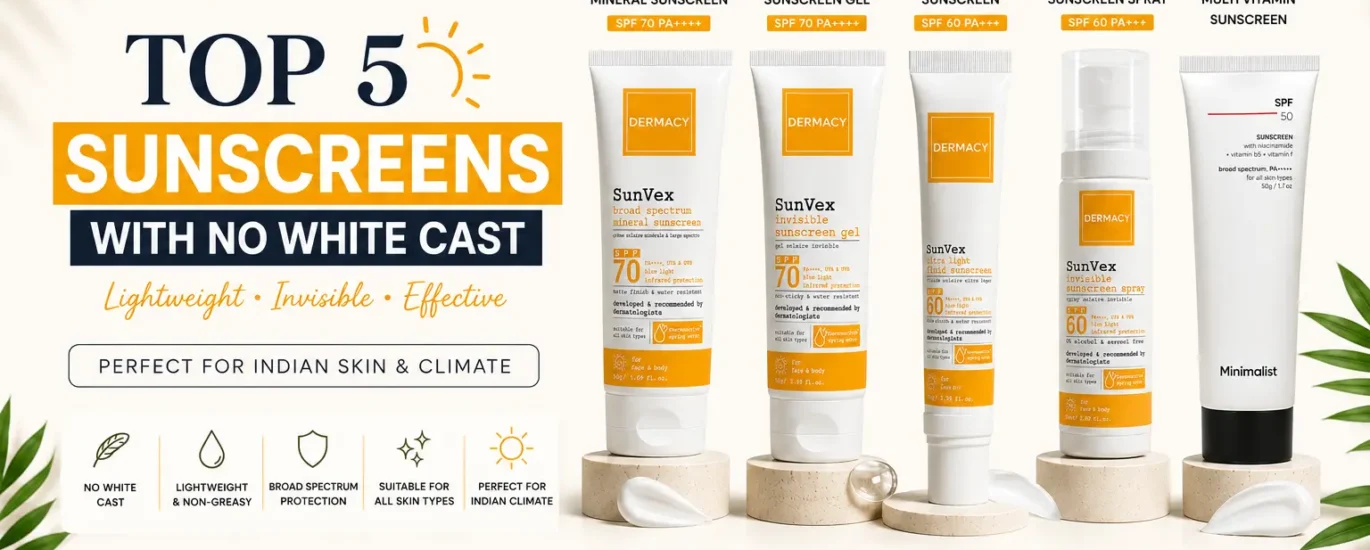
Top 5 Sunscreens With No White Cast in India
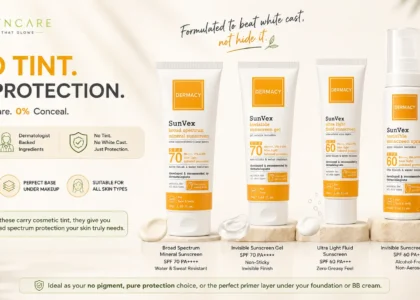
1. Dermacy Broad Spectrum Mineral Sunscreen SPF 70 PA++++
Best for sensitive and post treatment skin.
This one stands out because it flips the usual expectation around mineral sunscreens. Most people assume mineral automatically means more white cast, but this formula is built around thermal spring water, which is often used in dermatology focused skincare to calm and soothe compromised skin barriers. That makes it a genuinely sensible pick if your skin has recently been through a facial, a peel, laser treatment, or if it just reacts easily to actives in general.
At SPF 70 with PA++++, it sits on the higher end of protection available in the Indian market right now, which matters if you spend real time outdoors or have a history of pigmentation. Being a mineral formula, it also tends to be gentler on skin that reacts badly to chemical filters, since it works by sitting on the skin’s surface rather than being absorbed into it.
How to get the best result from it: apply it after your moisturiser has fully settled, and blend it in a little longer than you would a gel or fluid, since mineral formulas need slightly more working in to avoid sitting unevenly in humid weather.
Honest trade off, mineral formulas need a few extra seconds of blending in humid weather to avoid any patchiness, and the texture will feel slightly more present on skin compared to a fluid or gel.
Price is around 645 rupees for 50 grams.
2. Dermacy Invisible Sunscreen Gel SPF 70 PA++++
Best for oily and combination skin, daily wear.
This is the pick built specifically to fight the midday cast problem we covered earlier in this guide. Gel textures generally sit lighter on the skin and absorb faster than cream or mineral formulas, which means less product sitting on the surface for sweat and oil to break down through the day.
At SPF 70 with PA++++, it matches the mineral option above in protection level, but in a texture built for people who deal with shine, breakouts, or humidity discomfort. This makes it a strong daily driver pick, especially for anyone who has previously avoided sunscreen because it felt heavy or greasy by afternoon.
It also layers well under makeup, since gel formulas tend to create less of a slip or pilling issue compared to thicker creams.
Honest trade off, gel formulas can feel slightly tacky for the first minute after application before fully settling in, so give it a moment before applying anything on top.
Price is around 795 rupees for 50 grams.
3. Dermacy Ultra Light Fluid Sunscreen SPF 60 PA+++
Best for normal to dry skin, everyday wear under makeup.
Fluid sunscreens sit somewhere between a gel and a cream, lighter than a cream but with a bit more hydration than a pure gel. This makes it a solid middle ground option if your skin isn’t extremely oily but also doesn’t want the heavier feel of a cream sunscreen.
At SPF 60 with PA+++, it offers strong daily protection while being noticeably easier to layer under makeup, since fluid textures tend to create a smoother base without pilling. It’s a good option for people who wear makeup daily and want their sunscreen step to feel like part of the routine, not an extra chore before it.
Honest trade off, very dry skin may still want a moisturiser underneath during winter months or in air conditioned environments, since fluid formulas prioritise lightness over deep hydration.
Price is around 595 rupees for 40 millilitres.
4. Dermacy Invisible Sunscreen Spray SPF 60 PA+++
Best for quick reapplication over makeup.
Reapplying sunscreen over a full face of makeup is one of the most commonly skipped steps in most people’s routines, simply because it’s inconvenient. This spray format solves that problem directly, letting you top up protection without disturbing foundation or concealer underneath.
What makes it genuinely stand out is that it’s alcohol free and aerosol free. Most spray sunscreens rely on alcohol as a carrier to help the product dry quickly, but repeated alcohol exposure through the day can dry out and irritate skin, especially with multiple reapplications. Skipping that ingredient here is a real, meaningful difference, not just a marketing label.
At SPF 60 with PA+++, it’s slightly lower than the top two picks on this list, which makes sense given the lighter, quick-application format it’s built for.
Honest trade off, sprays generally need a slightly more generous application to match the same protection as a cream or gel, so don’t just do one quick spritz and call it done.
Price is around 645 rupees for 60 millilitres.
5. Minimalist SPF 50 PA++++ Multi Vitamin Sunscreen
Best for comparison, wheatish and olive skin tones.
This one is included deliberately as an honest outside comparison point rather than another Dermacy pick, so you can weigh the Dermacy range against something else widely available and well reviewed in the Indian market.
It’s formulated with a mix of chemical filters and titanium dioxide, along with added Vitamin B3, B5, E and F, positioned to support skin repair after sun exposure alongside the SPF protection itself. It’s frequently recommended for wheatish and olive skin tones specifically, and generally blends in well without heavy residue.
At SPF 50 with PA++++, its UVA protection rating matches the higher end Dermacy picks, though its SPF number is somewhat lower than the SPF 70 options on this list.
Honest trade off, some users report a slightly heavier or occlusive feel compared to the Dermacy gel and fluid options above, particularly in humid weather, so it may suit drier or normal skin better than very oily skin.
Real Cost Per Use Breakdown
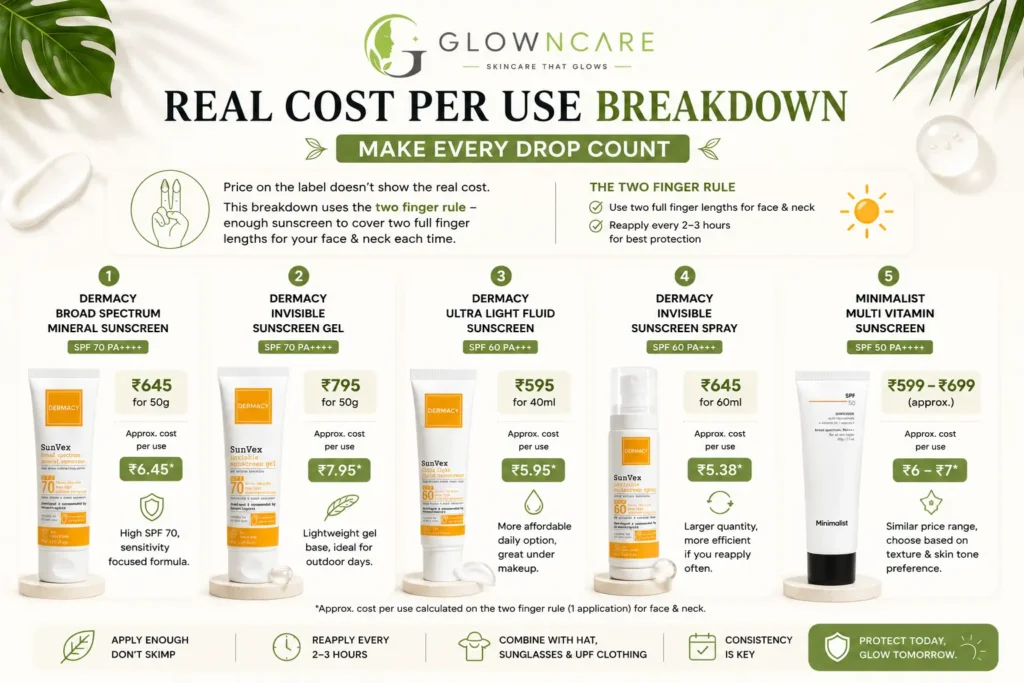
Price on the label does not tell you the real cost of daily sunscreen use. Here is a simple breakdown based on the two finger rule, which means using enough sunscreen to cover two full finger lengths for your face and neck each time.
Dermacy Broad Spectrum Mineral Sunscreen, 645 rupees for 50 grams, works out to a reasonable cost per use given its SPF 70 rating and sensitivity focused formula.
Dermacy Invisible Sunscreen Gel, 795 rupees for 50 grams, sits at the higher end price wise, but its SPF 70 and lightweight gel base make it a strong option if you are outdoors often.
Dermacy Ultra Light Fluid, 595 rupees for 40 millilitres, is one of the more affordable options here for daily use, especially for those wanting a lighter texture under makeup.
Dermacy Invisible Sunscreen Spray, 645 rupees for 60 millilitres, offers a slightly larger quantity, which can make its cost per use more efficient if you reapply often during the day.
Minimalist Multi Vitamin Sunscreen usually sits in a similar price range to the Dermacy options, making the real difference come down to texture and skin tone preference rather than price.
What Customers Are Saying
★★★★★ “My skin finally feels healthy again.”
“I’ve struggled with redness and sensitivity for years. Most products either irritated my skin or showed no results. After switching to Dermacy, my skin feels calmer, hydrated, and much stronger. Within a month, I noticed fewer flare-ups and a healthier glow.”
— Aditi S., 29 | Sensitive Skin
★★★★★ “The difference wasn’t overnight, but it was real.”
“I appreciate that Dermacy didn’t promise miracle results. My pigmentation gradually started fading after consistent use, and my skin texture became noticeably smoother. It feels like skincare backed by science rather than marketing.”
— Rahul M., 34 | Combination Skin
★★★★★ “Finally found products my dermatologist approves.”
“After trying countless trending brands, I wanted something formulated for skin health instead of temporary fixes. Dermacy fit perfectly into my dermatologist-recommended routine, and my skin barrier has never felt stronger.”
— Neha K., 31 | Dry & Sensitive Skin
Real Skin Transformations
Brighter, More Even Skin
Before: Uneven tone, stubborn dark spots, and dull complexion.
After 8–12 Weeks: Skin appears brighter, dark spots are visibly reduced, and overall complexion looks more even with consistent daily use.
Stronger Skin Barrier
Before: Frequent redness, irritation, tightness, and sensitivity.
After: Skin feels calmer, better hydrated, and more resilient against environmental stressors.
Deep Hydration
Before: Dry, rough skin with visible dehydration lines.
After: Skin looks plumper, smoother, and retains moisture throughout the day without feeling greasy.
How to Apply Sunscreen So It Does Not Cast or Fade by Midday
Use two full finger lengths of sunscreen for your face and neck. Using less than this is one of the biggest reasons sunscreen looks patchy or ineffective by afternoon.
Pat the sunscreen into your skin instead of rubbing it in harshly. Patting helps the formula sit more evenly, which reduces visible cast.
Blot any extra oil with a tissue before reapplying later in the day. This helps the new layer sit properly instead of clumping over old, broken down sunscreen.
Reapply every two to three hours if you are outdoors, and at least once through the day even indoors, since UV rays pass through glass windows too.
Related Reading on GlownCare
If you want to go deeper into building a full sun protection and skincare routine, these related guides on our site cover the topics that pair naturally with this one.
Best Sunscreen for Indian Skin: Top 5 Picks Tested for Tone, Climate and Cost
What Does Niacinamide Do for Skin: A Full Beginner Guide
Kojic Acid Soap vs Cream: Which One Actually Works Better
Note, replace each placeholder link above with the actual published URL once that post is live on your site. Do not publish this article with placeholder links still in place, since that would create a broken link.
Frequently Asked Questions
Why does sunscreen leave a white cast? White cast mostly comes from mineral sunscreens, which use zinc oxide and titanium dioxide. These particles sit on top of the skin and scatter light unevenly, creating a visible white or grey tint, especially on deeper skin tones.
Does spray sunscreen protect as well as cream sunscreen?
Yes, as long as you apply enough of it. Sprays often need a slightly more generous application to match the same protection level as a cream or gel sunscreen.
Can I use mineral sunscreen without a white cast?
Yes, modern mineral sunscreens with micronised particles and balanced formulas can leave little to no visible cast, though results vary depending on your skin tone and how much oil your skin produces through the day.
Does sunscreen get worse with sweating?
Yes. Sweat and oil can break down the sunscreen film through the day, which is why a sunscreen that looks clear in the morning can start showing cast again by afternoon.
Is alcohol free spray sunscreen better for the skin? Generally yes, since alcohol based sprays can dry out your skin with repeated use through the day, while alcohol free versions are gentler for daily reapplication.
Free Resource, Your Quick Sunscreen Shopping Checklist
Save or screenshot this before you buy your next sunscreen.
Check the SPF, aim for 50 or higher for Indian weather. Check the PA rating, look for PA+++ or PA++++ for strong UVA protection. Check the texture, gel or fluid for oily skin, cream for dry skin. Check for the word micronised if it is a mineral sunscreen. Check if it is non comedogenic if you are acne prone. Apply two full finger lengths for your face and neck every time. Reapply every two to three hours if you are outdoors. Blot oil before reapplying to avoid midday cast.
Conclusion
The best sunscreen isn’t the one with the highest SPF or the biggest marketing campaign, it’s the one you’ll actually wear every single day.
For most people looking for lightweight, everyday protection without the frustration of a visible white cast, Dermacy Invisible Sunscreen Gel SPF 70 PA++++ offers the strongest balance of protection, comfort, and wearability. If your skin is sensitive, recovering from dermatological treatments, or easily irritated, Dermacy Broad Spectrum Mineral Sunscreen SPF 70 PA++++ provides high-level UV defense while being gentle on compromised skin. And if you’re constantly on the move or wear makeup daily, Dermacy Invisible Sunscreen Spray SPF 60 PA+++ makes reapplication quick, convenient, and hassle-free.
Remember, even the most advanced sunscreen can’t protect your skin if it stays inside the bottle. Applying the right amount, reapplying every two to three hours when outdoors, and choosing a formula that suits your skin type are what truly make the difference.
Healthy skin isn’t built through occasional perfection, it’s built through consistent protection.
So instead of asking, “Which sunscreen has the highest SPF?”, ask yourself, “Which sunscreen will I happily use every day?” That single decision can do more to prevent premature ageing, pigmentation, and sun damage than almost any skincare product you’ll ever buy.
Choose wisely, wear it daily, and let your sunscreen become the easiest habit in your skincare routine, not the one you’re tempted to skip.
About the Author
The GlownCare team researches every product and ingredient before publishing. Each article goes through real product research, ingredient checks, and comparison against established dermatological facts, so readers get honest, practical guidance instead of copied marketing lines. GlownCare focuses on skincare that actually works for Indian skin tones, Indian weather, and everyday Indian routines, from daily commutes to long office hours to weekend sun exposure.
For more information you can contact us.