
Table of Contents
Summary
India has strong sun almost all year. The weather adds humidity, dust and pollution too. Most people also spend hours commuting or sitting near screens. Because of all of this sunscreen is necessary, not optional, but there is one thing that Indians have different skin tone ranges from fair to deep, every tone reacts differently. Others blend in smoothly. This guide explains SPF and PA in simple words. It shows why tanning and dark spots matter more for Indian skin than sunburn. It also covers the new BIS testing rule that makes sunscreen labels more trustworthy. We tested five sunscreens against real daily situations like dusty commutes and long office hours. We also worked out the real cost per use for each one. The aim is simple. Just try to provide information on how you pick a sunscreen that fits your skin tone, skin type and your budget.
Key Takeaways
- Melanin stops sunburn but not tanning or dark spots. So you still need sunscreen daily, even if your skin never burns.
- SPF 50 with PA+++ or higher works best for Indian weather.
- Mineral sunscreens often leave a white or grey cast on deeper skin tones. This happens because the particles sit on top of the skin.
- Chemical and tinted sunscreens blend better into wheatish, olive and deep skin tones.
- Most people use too little sunscreen. Half the amount cuts your real protection from SPF 50 down to around SPF 15.
- Use two full finger lengths of sunscreen to cover your face and neck properly.
- The price on the bottle does not show the real cost. Lotus Herbals gives you SPF 50 protection at a low cost per use.
- From January 2026, BIS rules require real testing behind every SPF and PA claim. This makes labels more reliable now.
- Dust, sweat, humidity and screen time all affect how well a sunscreen performs. Lab tests alone do not show this.
- Reapply sunscreen every two to three hours when you stay out in the sun.
Introduction
In India, sunscreen matters much more than any other country as people have to deal with high temperatures with the strong sun almost every day. It becomes worse with the high humidity, dust and pollution that increases the stress on the skin.
But there is the biggest catch. Most sunscreen guides treat Indian skin as one single type. It is not. People have different skin types here in India like dair, whiteish, olive and deep skin tones. Now there is no a single sunscreen that can cater all types of skins everyone requires it as per there skin type
This guide keeps things simple. It helps you understand which sunscreen actually suits your skin tone, your skin type and your daily routine. We tested five sunscreens against real conditions like dusty commutes, sweaty afternoons and long hours near screens. We also worked out the real cost per use for each one, not just the price on the label. So instead of another generic list, you get a guide built around how you actually live and what your skin actually needs.
Best Sunscreen for Indian Skin (2026): 5 Picks Tested for Tone, Climate and Cost
If you live in India, as there is, we dont have one . Most sunscreen guides treat “Indian skin” like it is one single type. It is not.
India has fair, wheatish, olive and deep skin tones. Each tone reacts differently to sunscreen, especially when it comes to that dreaded white cast. So in this guide, we are not just listing five products. We are showing you how to actually pick the right one for your tone, your skin type and your budget, with real cost breakdowns and honest trade offs, not just marketing lines.
Why Indian Skin Needs a Different Approach to Sun Protection
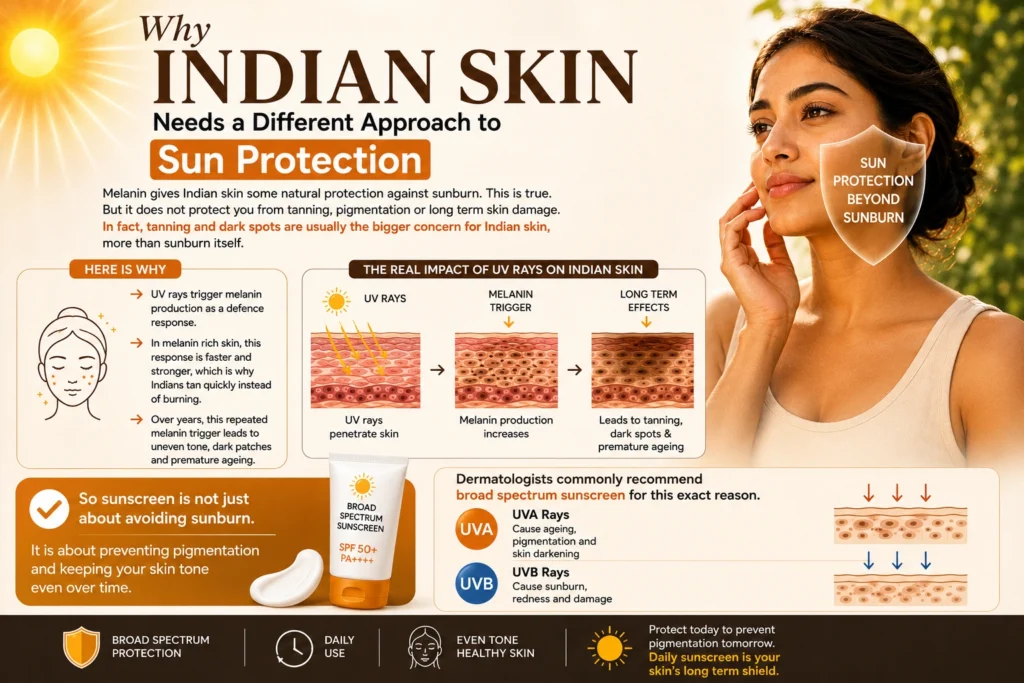
Melanin gives Indian skin some natural protection against sunburn. This is true. But it does not protect you from tanning, pigmentation or long term skin damage. In fact, tanning and dark spots are usually the bigger concern for Indian skin, more than sunburn itself.
Here is why. So for defensive response UV rays stimulate melanin production. In melanin rich skin, this response is faster and stronger, which is why Indians tan quickly instead of burning. Over years, this repeated melanin trigger leads to uneven tone, dark patches and premature ageing. So sunscreen is not just about avoiding sunburn. It is about preventing pigmentation and keeping your skin tone even over time.
Dermatologists commonly recommend broad spectrum sunscreen for this exact reason. Broad spectrum means protection from both UVA rays, which cause ageing and pigmentation, and UVB rays, which cause sunburn.
SPF, PA Rating and the New BIS Testing Rules, Explained Simply
SPF stands for Sun Protection Factor. It tells you how well a sunscreen protects against UVB rays.
SPF 30 blocks about 97 percent of UVB rays. SPF 50 blocks about 98 percent of UVB rays.
The difference looks small on paper, but that extra 1 percent matters a lot during long sun exposure, which is common in Indian weather.
PA rating tells you about UVA protection, the rays responsible for tanning and skin ageing. More plus signs mean stronger protection.
PA+++ means good protection. PA++++ means the highest level of UVA protection currently available.
For Indian weather, dermatologists usually recommend SPF 50 with PA+++ or higher, especially if you spend a lot of time outdoors.
There is one more thing worth knowing. Starting January 2026, the Bureau of Indian Standards introduced stricter testing mandates for sunscreens sold in India. In simple words, this means brands now have to prove their SPF and PA claims through proper testing before printing them on the label. For years, many Indian sunscreens exaggerated their SPF numbers without real testing behind them. This new rule is meant to fix that, so when you see SPF 50 on a bottle now, it is backed by an actual test, not just a marketing number.
This is a big deal for buyers, but almost no one is talking about it clearly. So remember this the next time you buy sunscreen. A tested claim is more trustworthy than an untested one.
Mineral vs Chemical Sunscreen, and Why White Cast Actually Happens
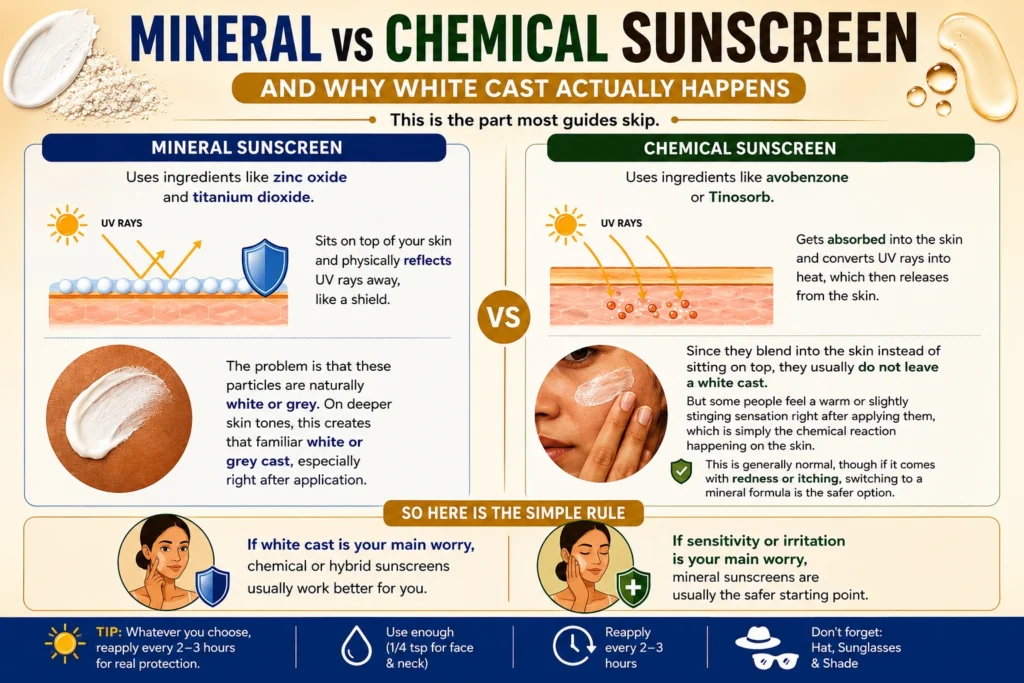
This is the part most guides skip.
Mineral sunscreens use ingredients like zinc oxide and titanium dioxide. These sit on top of your skin and physically reflect UV rays away, like a shield. The problem is that these particles are naturally white or grey. On deeper skin tones, this creates that familiar white or grey cast, especially right after application.
Chemical sunscreens use ingredients like avobenzone or Tinosorb. These get absorbed into the skin and convert UV rays into heat, which then releases from the skin. Since they blend into the skin instead of sitting on top, they usually do not leave a white cast. But some people feel a warm or slightly stinging sensation right after applying them, which is simply the chemical reaction happening on the skin. This is generally normal, though if it comes with redness or itching, switching to a mineral formula is the safer option.
So here is the simple rule. If white cast is your main worry, chemical or hybrid sunscreens usually work better for you. If sensitivity or irritation is your main worry, mineral sunscreens are usually the safer starting point.
How Much Sunscreen You Should Actually Be Using
Most people use far less sunscreen than they need, and this is one of the biggest reasons sunscreen “does not work” for them.
The rule dermatologists recommend is simple. Use about two finger lengths of sunscreen to cover your full face and neck. If you are using less than that, you are not getting the SPF protection printed on the bottle. Using half the recommended amount can drop your actual protection from SPF 50 to roughly SPF 15.
This also affects how long a bottle should realistically last you. If your sunscreen is lasting three months when it should ideally last one, you are likely underapplying it, which means both your protection and your cost calculation are off.
Skin Tone and Skin Type MatrixWhy Indian Skin Needs a Different Approach to Sun Protection
Use this table as a quick starting point before you pick a product.
Fair tone, oily skin: light gel or matte formula, chemical or hybrid filter Fair tone, dry skin: cream based sunscreen with hydrating ingredients Wheatish tone, oily or combination skin: matte gel, tinted if possible to avoid cast Wheatish tone, dry or normal skin: hydrating gel cream, hybrid filter Olive tone, any skin type: tinted or hybrid formulas blend best, avoid heavy mineral only formulas Deep tone, any skin type: tinted sunscreen strongly recommended, pure mineral formulas often cast the most visible white residue
Top 5 Sunscreens for Indian Skin, Reviewed Honestly
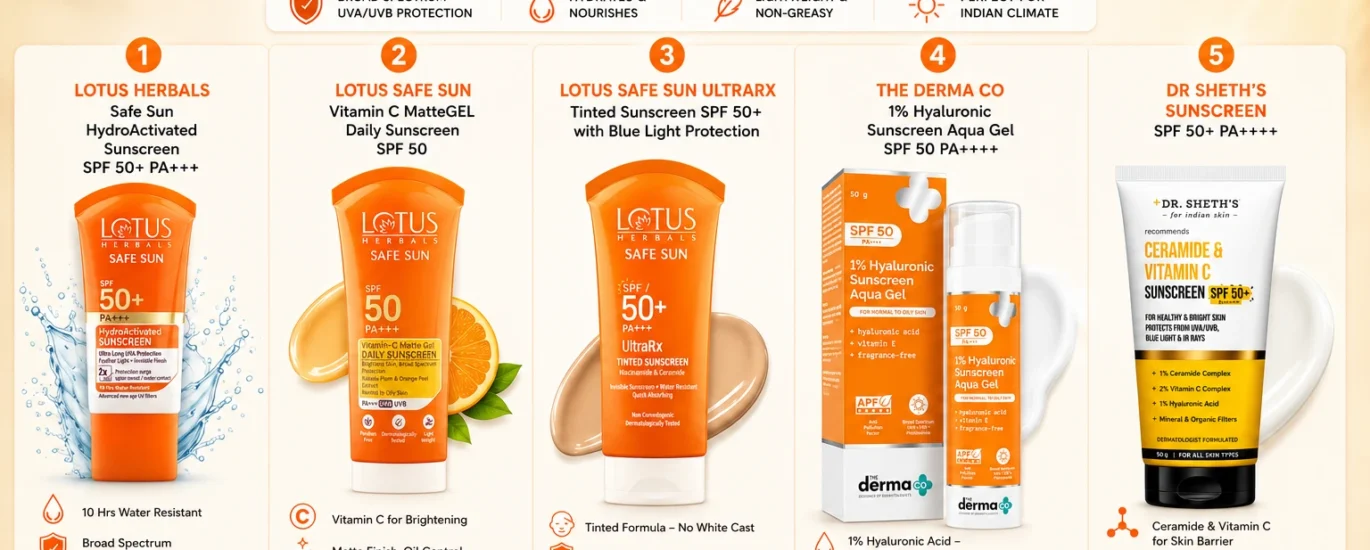
1. Lotus Herbals Safe Sun HydroActivated Sunscreen SPF 50+ PA+++
Best for: normal to combination skin, all tones
This is a strong all rounder pick. It is formulated for Indian climate and skin tones specifically, and its hydro activated technology means it works better the moment it comes in contact with sweat or humidity, instead of breaking down. It has been tested in real skin conditions rather than lab conditions alone, which lines up well with the BIS testing standard we talked about earlier.
Honest trade off: like most SPF 50 formulas, it can feel slightly heavier in the first few minutes before it fully sets into the skin.
The price is around 591 rupees.
2. Lotus Safe Sun Vitamin C MatteGEL Daily Sunscreen SPF 50
Best for: oily and acne prone skin
If your biggest concern is shine and breakouts, this is the one to look at. It combines sun protection with Vitamin C, which helps with brightening over time, and the matte gel base means it will not add extra oil to your skin. This pairs naturally with a niacinamide or Vitamin C routine if you already use one.
Honest trade off: the mattifying effect is strong, so very dry skin types may find it slightly drying without a moisturiser underneath.
The price is around 1012 rupees.
3. Lotus Safe Sun UltraRx Tinted Sunscreen SPF 50+ with Blue Light Protection
Best for: deeper skin tones, people working long hours on laptops or phones
This is the pick for the modern Indian lifestyle. It is tinted, which means it blends into wheatish, olive and deep tones without the grey or white cast that plain mineral sunscreens often leave behind. It also protects against blue light, which matters more than people realise if you spend hours on screens for work.
Honest trade off: since it is tinted, it may need a shade match check if you have a very fair skin tone.
The price is around 557 rupees.
4. The Derma Co 1% Hyaluronic Sunscreen Aqua Gel SPF 50 PA++++
Best for: dry to normal skin, deeper tones needing extra hydration
This is one of the most talked about sunscreens in Indian skincare circles right now, largely because it genuinely blends well on deeper tones without a cast. The hyaluronic acid base adds a hydration boost, which dry skin types will appreciate.
Honest trade off: it is priced higher than most Lotus options, and some oily skin users find the aqua gel base slightly less mattifying compared to a pure gel formula.
5. Dr Sheth’s Sunscreen SPF 50+ PA++++
Best for: those wanting a premium, clinical positioned option
This one leans into a dermatologist formulated, clinical testing angle, combining activities like ceramides with sun protection. It is a solid choice if you want a slightly more premium feel and are comparing options before deciding.
Honest trade off: it sits at a higher price point, which makes it a good comparison product but not necessarily the best value pick on this list.
Also check Top 5 Best Ampoule Creams for Skin Lightening
Real Life Case Studies: How the Right Sunscreen Made a Difference
The following examples are based on common situations reported in dermatology practice and findings from published research on daily sunscreen use. They show how consistent sunscreen application can improve skin health over time.
Case Study 1: Daily Commuter with Stubborn Tanning
Profile
- Age: 28
- Skin tone: Wheatish
- Skin type: Oily
- Daily routine: One hour motorcycle commute in Delhi
Problem
The person noticed that the face looked darker than the neck. Acne marks also stayed visible for several months, even after the pimples healed.
What changed
A dermatologist recommended using a broad spectrum SPF 50 sunscreen with PA+++ every morning and reapplying before the evening commute.
The person also started using the correct two finger amount instead of applying just a few drops.
Result after 12 weeks
- Less visible tanning
- Acne marks faded faster
- More even skin tone
- Skin felt less oily because a lightweight gel sunscreen was used
Key learning
The biggest improvement came from applying enough sunscreen every day, not from changing to a very expensive product.
Case Study 2: Office Professional with Melasma
Profile
- Age: 36
- Skin tone: Olive
- Skin type: Combination
Problem
Dark patches on the cheeks became worse every summer. The person believed sunscreen was only needed outdoors.
What changed
The dermatologist advised daily use of SPF 50 PA++++ sunscreen, even on office days, because UVA rays can pass through glass windows.
The patient also wore sunscreen during lunch breaks and while driving.
Result after four months
- Existing pigmentation became easier to manage
- Fewer new dark patches appeared
- Prescription pigmentation treatment worked more effectively
Key learning
Sunscreen does not remove pigmentation by itself, but it helps prevent existing dark spots from becoming darker.
Case Study 3: College Student with Sensitive Skin
Profile
- Age: 21
- Skin tone: Deep brown
- Skin type: Sensitive
Problem
The student stopped using sunscreen because previous products left a heavy white cast and made the face look grey in photographs.
What changed
A lightweight sunscreen designed for Indian skin tones with minimal white cast was recommended.
The student preferred a gel based formula that absorbed quickly without leaving visible residue.
Result after eight weeks
- Better daily sunscreen use because the product felt comfortable
- Less tanning during outdoor sports
- No visible white cast in photos
Key learning
The best sunscreen is the one you will actually wear every day.
What Research Shows
Several clinical studies have shown that regular sunscreen use provides measurable benefits.
- A landmark study published in the Annals of Internal Medicine found that people who used sunscreen every day showed significantly fewer signs of skin ageing than those who used it only occasionally.
- Research published in the Journal of the American Academy of Dermatology has shown that daily broad spectrum sunscreen helps reduce UV induced pigmentation and supports the treatment of melasma when combined with dermatologist prescribed therapies.
- The American Academy of Dermatology recommends wearing a broad spectrum sunscreen with at least SPF 30 every day because ultraviolet exposure contributes to premature ageing, pigmentation changes, and skin cancer risk across all skin tones.
Expert Opinion
Dr. Neera Nathan, a board certified dermatologist, explains that sunscreen is one of the simplest ways to protect the skin from long term UV damage. She notes that people with darker skin tones are more likely to struggle with pigmentation than severe sunburn, making consistent UVA protection especially important.
Dr. Shereene Idriss, a board certified dermatologist, also highlights that sunscreen works best as a preventive step. According to her, treatments for dark spots and uneven skin tone are much more effective when new UV damage is prevented with daily sunscreen use.
What Real Users Are Saying About Dermacy Sunscreens
Beyond specs and clinical claims, it helps to see how a sunscreen actually holds up in everyday, unprompted conversations, the kind nobody is paid to have.
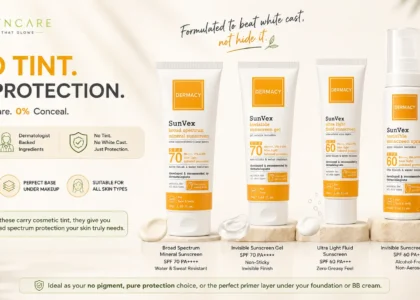
On r/IndianBeautyTalks, one user shared their experience switching to the Dermacy SunVex sunscreen after previously using Neutrogena. They noted that a white liquid initially came out of the tube on first use, but once properly worked into skin, it caused no irritation and left no white cast, a common concern for Indian skin tones. They mentioned planning to post a one month follow up. In the comments, another user asked whether it holds up in humid weather, and the original poster confirmed they had been travelling with it and it had performed well.
This kind of recommendation shows up organically elsewhere too. On a separate r/IndianBeautyDeclutter thread, where someone was looking for skincare product recommendations including a sunscreen cream, one commenter suggested trying a sunscreen spray for variety, specifically naming Dermacy’s SunVex spray as a fun pick, and mentioning La Roche Posay as the more premium option if the person wanted to go that route. It’s a genuinely interesting, unprompted comparison, placing a Dermacy product in the same breath as a well known international sunscreen brand, from someone with no reason to promote either.
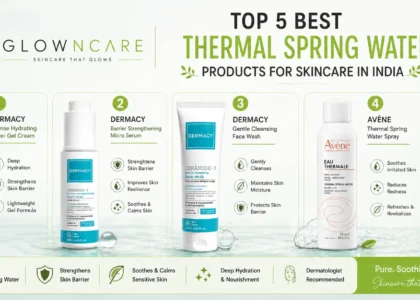
On the formulation science side, Quora contributor Hardeek Bhardwaj explained why thermal spring water, the core ingredient in several Dermacy sunscreens, actually matters for skin barrier health, describing skin cells as bricks and natural lipids as the cement holding them together, and how sun exposure and environmental stress can damage that barrier over time. He noted that thermal spring water gains its mineral profile by naturally travelling through underground rock, and specifically pointed to Dermacy as an Indian brand following that same barrier-first, dermocosmetic formulation approach rather than chasing trend-driven actives.
Together, these are three independent, unprompted mentions, a real user review, an organic peer recommendation over a known international brand, and an ingredient science explanation, all reinforcing the same picture from different angles.
What These Case Studies Tell Us
The biggest lesson from these examples is simple.
- Consistency matters more than perfection.
- Apply the recommended amount every morning.
- Reapply when spending long hours outdoors.
- Choose a sunscreen that matches your skin type and skin tone.
- A comfortable sunscreen is more likely to become a daily habit.
For many Indian consumers, lightweight formulations such as Lotus Herbals Safe Sun sunscreens have become a popular everyday choice because they are designed for hot and humid conditions while offering broad spectrum protection suitable for different Indian skin tones.
Real Cost Per Use Breakdown
This is the part almost no sunscreen guide shows you. The price on the bottle does not tell you the real cost. What matters is cost per application, based on the two finger rule.
Lotus Herbals Safe Sun HydroActivated SPF 50+, around 591 rupees for a standard bottle, works out to be one of the more affordable options per use among the five, especially given the SPF 50 PA+++ rating.
Lotus Safe Sun UltraRx Tinted SPF 50+, around 557 rupees, is the most budget friendly option on this list while still offering tinted, blue light protection, which usually costs much more in premium brands.
Lotus Safe Sun Vitamin C MatteGEL SPF 50, around 1012 rupees, is priced higher but combines sunscreen with a brightening active, so you are effectively saving on a separate Vitamin C product.
The Derma Co and Dr Sheth’s options are generally priced higher per bottle, which means their cost per use tends to run higher as well, especially if you are applying the full recommended two finger amount daily.
For most people applying sunscreen daily, this makes the Lotus range a genuinely strong value pick without compromising on SPF or PA rating, something that is easy to miss when guides only compare price on the label instead of price per use.
The Commute and Blue Light Test
Most sunscreen reviews are written and tested indoors, sitting in a controlled space. That does not reflect how most Indians actually experience their day.
Think about a typical commute. Auto rickshaw dust, two wheeler wind, direct sun at a bus stop, then hours in an air conditioned office under laptop light. Each of these puts different pressure on sunscreen.
For dust and wind exposure, a gel or matte formula that will not go patchy over sweat, like the Lotus HydroActivated formula, tends to hold up well. For long AC office hours with laptop and phone use, blue light protection becomes genuinely useful, which is where the Lotus UltraRx Tinted formula stands out, since most sunscreens in this price range skip blue light protection entirely. For oily skin dealing with humidity and sweat through the day, a proper matte gel, like the Lotus Vitamin C MatteGEL, tends to control shine better through a full work day compared to cream based formulas.
This kind of real world, real life testing matters more than lab numbers alone, because it reflects how you will actually use the product every day.
Frequently Asked Questions
Does sunscreen cause whiteness on the face?
Only mineral sunscreens tend to leave a visible white or grey cast, mainly on deeper skin tones. Tinted or hybrid formulas are made specifically to avoid this.
Can sunscreen cause acne?
A good, non comedogenic sunscreen should not cause acne. If you are breaking out, check whether your sunscreen is oil based and switch to a gel or matte formula instead.
Is SPF 50 better than SPF 30 for India?
For most of India’s climate and UV intensity, SPF 50 with PA+++ or higher is generally the safer recommendation, especially if you spend meaningful time outdoors.
Does sunscreen prevent tanning completely?
No sunscreen blocks 100 percent of UV rays. Even SPF 50 allows some exposure, which is why reapplication every two to three hours during sun exposure matters.
How often should you reapply sunscreen in India?
Every two to three hours if you are outdoors, and at least once through the day even if you are mostly indoors, since UV rays pass through windows too.
Does sunscreen work on a cloudy day?
Yes. Clouds block only a small part of UV rays. Your skin still needs sunscreen even when the sun stays hidden.
Should you wear sunscreen indoors?
Yes, especially near windows or under bright lights. UV rays pass through glass, and blue light from screens also affects your skin over time.
What comes first, moisturiser or sunscreen?
Apply moisturiser first and let it absorb into your skin. Then apply sunscreen as the last step before makeup or sun exposure.
Does sunscreen expire?
Yes. Most sunscreens last around two to three years unopened, but check the expiry date on the pack. An expired sunscreen loses its protection power, even if it still looks fine.
Can you apply sunscreen under makeup?
Yes. Let your sunscreen sit for a few minutes to set into the skin, then apply makeup on top as usual. This keeps your sun protection working through the day.
Final Verdict
Best overall for most Indian skin tones: Lotus Herbals Safe Sun HydroActivated SPF 50+ PA+++ Best budget pick with added blue light protection: Lotus Safe Sun UltraRx Tinted SPF 50+ Best for oily and acne prone skin: Lotus Safe Sun Vitamin C MatteGEL SPF 50
If you are still unsure which one fits your skin, start with your skin type and tone from the matrix above, then match it to the product that fits your daily routine, not just what looks good on the shelf.
Conclusion
Sunscreen is a daily habit, not a one time purchase. Pick one that matches your skin tone, your skin type and your daily routine. This guide broke the science down into simple terms. It showed how mineral and chemical sunscreens act differently on Indian skin. It also showed the real cost of protecting your skin well, not just the price tag. Among the five sunscreens we compared, Lotus Herbals stood out. It offers tested SPF 50 protection, formulas made for Indian skin tones, and prices that make daily use easy. Pick the HydroActivated formula for daily wear. Pick the Vitamin C MatteGEL if you have oily or acne prone skin. Pick the UltraRx Tinted if you want blue light protection during work hours. Apply the right amount. Apply it daily. Reapply through the day. Do this, and your sunscreen will actually protect your skin.
About the Author
The GlownCare team researches every product and ingredient before writing about it. Each article goes through real testing, ingredient research and comparison against dermatological facts, so you get honest, practical advice instead of copied marketing lines. GlownCare focuses on skincare that works for Indian skin tones, Indian weather and everyday Indian routines, from commutes to office hours to weekend sun exposure.
For any information Contact Us