

Table of Contents
Summary
Dull, tired-looking skin almost never comes from a single cause, which is why so many products promise a fix and quietly fail to deliver one. Sometimes it’s dehydration, sometimes it’s dead skin cells that haven’t shed on schedule, sometimes it’s poor circulation from too little sleep, and often it’s a mix of all three plus a bit of uneven pigmentation thrown in. The real fix isn’t finding the “best” product on some generic list – it’s figuring out which of those is actually happening to your skin, and picking an ingredient that matches it.
That’s the whole idea behind this guide. We didn’t just round up popular ampoule creams and rank them by star ratings. We looked at what dermatologists actually say causes dullness and fatigue in skin, matched that to the ingredients that genuinely address each cause, and then picked products – cream-textured, not just watery serums – that hold up to that logic.
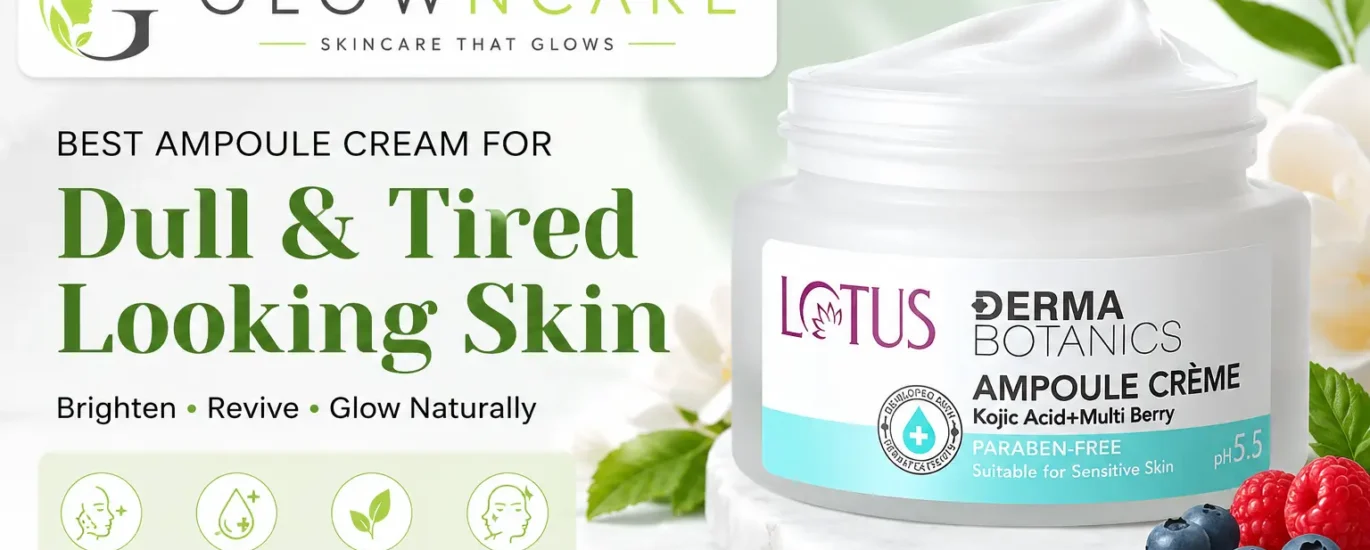
If we’re being straightforward with you: our top pick, the Lotus DermaBotanics Kojic Acid + Multi Berry Ampoule Crème, is a strong fit if your dullness shows up as uneven tone, dark spots, or leftover marks – that’s what kojic acid is genuinely good at, and the berry blend backing it up adds real hydration and soothing benefits rather than just brightening on the surface. It’s also dermat-tested, gentle enough for daily use, and priced in a way that doesn’t require importing anything or waiting on international shipping. But we’re not going to tell you it fixes every kind of tired skin, because it doesn’t – no single product does. If your dullness is more about pure fatigue or dryness, we’ve pointed you toward better-matched options above, too.
That’s really the trust we’re going for here: not “buy this because it’s #1,” but “here’s why your skin looks the way it does, and here’s what actually helps.” Patch test before you commit to anything, give a product a few weeks before judging it, and pair whatever you choose with sunscreen, sleep, and a little patience – the rest tends to follow.
Key Takeaways
- Dull skin and tired skin aren’t always the same problem. Dullness is usually about texture and tone – dead skin cells, uneven pigmentation. Tiredness is more about circulation and sleep. Knowing which one you’re actually dealing with changes what you should buy.
- An ampoule cream isn’t just a fancier moisturizer. It’s a hybrid – concentrated, treatment-level actives in a cream base rich enough to replace your daily moisturizer, which makes it a genuinely efficient addition to a routine rather than one more step to squeeze in.
- There’s no single ingredient that fixes every kind of dullness. Kojic acid and vitamin C are excellent for pigmentation and uneven tone. Hyaluronic acid and ceramides matter more if dehydration is the real issue. Matching the active to the actual cause matters more than chasing whatever’s trending.
- Sleep and circulation genuinely show up on your face. No cream fully compensates for chronic poor sleep or a sedentary routine – skincare helps, but it works better alongside the basics, not instead of them.
- Kojic acid works by inhibiting melanin production, which is why it’s specifically good at fading dark spots and evening out tone, rather than just adding a temporary glow that fades by evening.
- Price doesn’t always reflect performance. A well-formulated, budget-friendly option like the Lotus DermaBotanics crème can genuinely hold its own against pricier imported alternatives, especially when the ingredient list is doing real work rather than riding on brand name alone.
- Sunscreen isn’t optional once you introduce brightening actives. Ingredients like kojic acid can make skin more reactive to sun exposure, so skipping SPF undoes a lot of the progress you’re trying to make.
- Patch testing is a five-minute habit that saves you weeks of irritation. Ampoule-strength formulas are more concentrated than regular skincare, and a quick test on your arm tells you more than any review ever will.
- Results take a few weeks, not a few days. Most people notice a real difference around the four-week mark, which lines up with skin’s natural renewal cycle – patience matters more than switching products constantly.
- A product that’s honest about its limits is more trustworthy than one that claims to fix everything. No single ampoule cream solves pigmentation, dehydration, sensitivity, and fatigue all at once – the goal is finding the one that’s actually built for what your skin needs.
Introduction
There’s a specific kind of tired that shows up on your face before you even feel it. You slept fine, you’re not sick, but the mirror says otherwise – flat tone, no bounce, that grey-ish cast that no amount of concealer quite fixes. If you’ve been searching for the best ampoule cream for dull and tired looking skin, you’ve probably already noticed something frustrating: most of what comes up either sells you a product without explaining why your skin looks the way it does, or explains the science and never actually recommends anything. This guide tries to do both – walk through what’s actually causing the dullness, and point you toward ampoule creams (including a genuinely good budget pick) that address it.
Quick answer, if you’re short on time: an ampoule cream is a moisturizer-textured version of a traditional ampoule – meaning you get concentrated, treatment-level actives in a base rich enough to double as your daily cream. For dullness caused by pigmentation, uneven tone, or leftover marks, our top pick is the Lotus DermaBotanics Kojic Acid + Multi Berry Ampoule Crème – it’s dermat-tested, oil-free, gentle enough for sensitive skin, and priced at ₹463 for 50g, which makes it one of the more accessible options in a category dominated by pricier Korean and European imports.
What Is an Ampoule Cream, Really?
Before you buy anything, it helps to know what you’re actually buying, because “ampoule,” “ampoule serum,” and “ampoule cream” get used interchangeably online even though they’re not the same thing.
An ampoule, in the traditional sense, is a small, single-use vial packed with a very high concentration of active ingredients – usually water-thin, meant to be used for a short, intensive stretch rather than every day. An ampoule serum is basically that same concentrated formula but bottled like a regular serum instead of individual vials. An ampoule cream takes it a step further: it keeps the treatment-level actives but suspends them in a richer, moisturizer-like base. That means it can sit in for your daily moisturizer step instead of being an extra layer, which is a big part of why it’s become popular with people who want results without adding five more steps to their routine.
For dull and tired skin specifically, this distinction actually matters. A watery ampoule serum might deliver a quick jolt of brightness, but if your dullness is tied to a compromised moisture barrier – which it often is – a cream-based formula does more of the actual repair work while it brightens.
Why Does Skin Look Dull and Tired in the First Place?
Almost every product page will tell you their formula fixes dullness. Almost none of them tell you what’s causing it. So here’s the honest rundown, because matching the cause to the ingredient is the difference between a product that works for you and one that just sits in your cabinet.
Dehydration is probably the single biggest driver. When skin doesn’t have enough water content, the surface doesn’t reflect light evenly, and that’s what reads as “dull” rather than “glowing.” This is different from dry skin, by the way – you can have oily, dehydrated skin that still looks flat and lifeless.
Dead skin cell buildup is the next big one. As cell turnover slows down – which happens gradually with age, and faster with sun damage or a spotty skincare routine – dead cells linger on the surface longer than they should, creating that rough, light-absorbing texture instead of a smooth, light-reflecting one.
Poor circulation is the piece most people miss entirely. Skin needs a steady supply of oxygen and nutrients to look alive, and when circulation slows down – from sitting all day, chronic stress, or just not sleeping enough – skin can take on a pale, sallow, almost ashy quality. This is the part of “dullness” that’s really more accurately described as looking tired, and it responds to different ingredients than pigmentation-driven dullness does.
Then there’s the environmental side: UV exposure breaking down collagen over time, pollution triggering oxidative stress, and plain old sleep deprivation, which disrupts the overnight repair process your skin relies on. Layer all of that with the natural decline in collagen and hyaluronic acid production as you get older, and you’ve got a pretty complete picture of why “dull and tired” is rarely caused by just one thing.
Figure Out Your Actual Cause Before You Shop
Because dullness isn’t one problem, treating it like one problem is where a lot of routines go wrong. A quick way to sort it out:
If your skin feels rough, flaky, or uneven to the touch, you’re probably dealing with dead cell buildup, and gentle exfoliating acids are going to do more for you than a brightening cream alone.
If it looks flat and almost grey, with skin that feels tight or thirsty, that’s dehydration talking – reach for hyaluronic acid and ceramide-rich formulas.
If you’re noticing patchiness, dark spots, or an uneven tone rather than an all-over flatness, that’s pigmentation – and this is where kojic acid, vitamin C, and niacinamide genuinely earn their reputation.
If your skin just looks tired – a little puffy, a little sallow, like you haven’t slept even when you have – that’s circulation-driven, and ingredients like caffeine, peptides, and vitamin C tend to help more than pure brighteners.
And if dullness shows up alongside redness, sensitivity, or irritation, your barrier needs attention first, through centella asiatica, panthenol, and ceramides, before brightening actives will do much good.
Most people are dealing with some combination of these, which is exactly why a cream with a well-rounded ingredient list – rather than a single-active spot treatment – tends to perform better in the long run.
What to Actually Look for in an Ampoule Cream
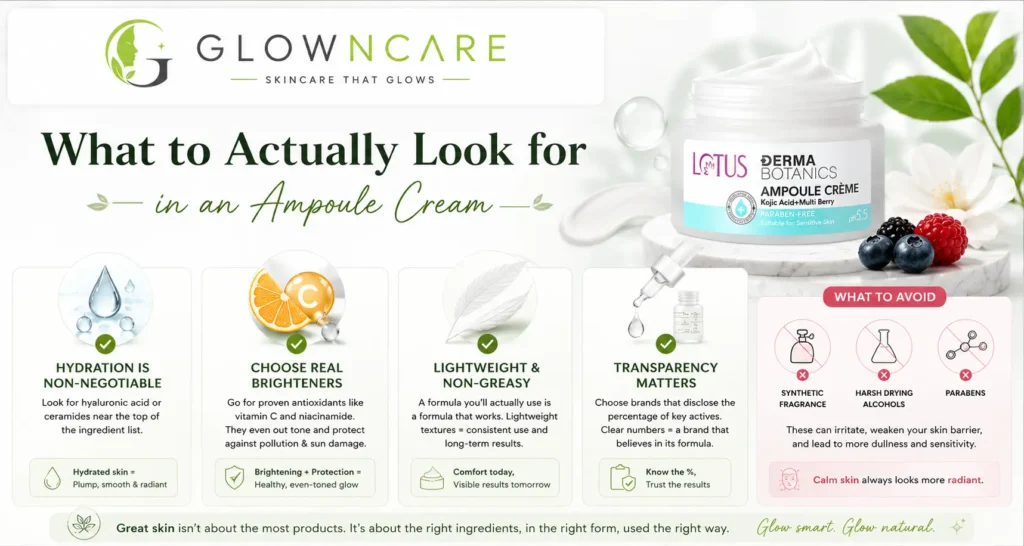
With so many ampoule creams claiming to fix dullness, it helps to know what actually matters on the ingredient label versus what’s just clever packaging. A few things we’d genuinely encourage you not to skip, no matter which product you end up choosing.
Hydration has to be non-negotiable – look for hyaluronic acid or ceramides somewhere near the top of the ingredient list. Dull skin is very often thirsty skin underneath everything else, and no amount of brightening will look convincing on top of a barrier that’s running dry.
You’ll also want a genuine antioxidant doing the actual brightening work – vitamin C and niacinamide are the two with the most track record, both for evening out tone and for giving your skin some defense against the everyday pollution and sun exposure that quietly dull it over time.
Texture matters more than people expect. A formula that’s lightweight and non-greasy is going to get used consistently, which honestly matters more than whether it’s the most “concentrated” option on the shelf – a product sitting unused in your cabinet because it feels too heavy isn’t helping anyone.
And here’s one we’d genuinely love to see more brands do: tell you what percentage of the key active you’re actually getting. Vague claims like “enriched with vitamin C” don’t mean much without a number behind them, and brands that are upfront about their concentrations are usually the ones that trust their formula enough to show their work.
On the flip side, it’s worth being a little cautious around ingredient lists heavy on synthetic fragrance, harsh drying alcohols, and parabens – especially if your skin tends to react easily. It’s a simple bit of logic, but one that gets overlooked constantly: irritated skin never looks radiant, no matter how many good ingredients are sitting in the same bottle. Sometimes the most brightening thing you can do for your skin is just stop provoking it.
The Best Ampoule Creams for Dull and Tired Skin
Best Overall for Pigmentation-Driven Dullness: Lotus DermaBotanics Kojic Acid + Multi Berry Ampoule Crème
This one earns the top spot for a specific reason – it’s built around kojic acid, which works by inhibiting melanin production, meaning it directly targets the dark spots, patchiness, and uneven tone that make skin look dull in the first place, rather than just adding a temporary sheen on top. What makes the formula more interesting than a single-active brightener is the multi-berry blend backing it up. Strawberry extract, which is naturally rich in vitamin C, helps brighten tone and refine the look of pores. Raspberry extract calms redness and irritation, which matters if your skin reacts easily. Blueberry extract supports collagen synthesis and adds a hydrating element the formula would otherwise lack. Cranberry extract has natural antiseptic properties that make it useful if breakouts are part of your dullness story, and acai berry extract rounds it out with antioxidant, skin-repairing benefits.
In practice, that combination means the crème isn’t just brightening – it’s also soothing and hydrating enough to be used both morning and night without stripping the skin. It’s oil-free, formulated to be gentle on sensitive skin, and dermat-tested, and reviewers consistently mention visibly clearer, smoother skin within about four weeks of regular use, along with the fact that it doesn’t cause any burning or stinging on application, which is a common complaint with stronger brightening actives. At ₹463 for 50g, it’s also considerably more affordable than most imported Korean or European ampoule creams, without skimping on the actual active ingredient list.
One honest note: this formula is built primarily around pigmentation and tone-evening, so if your dullness is mostly about looking tired from poor sleep or circulation rather than uneven tone or dark spots, you’ll get better results pairing it with something like a caffeine-based eye cream, or simply prioritizing sleep alongside it. It’s an excellent match for tone-driven dullness specifically – not a cure-all for every kind of tired skin, and it doesn’t pretend to be.
Best for Deep Hydration-Driven Dullness: Mizon Peptide Ampoule Cream
If your dullness is really dehydration wearing a different disguise, this one leans into moisture and firmness. It combines peptides with a rich, cream-based texture that’s meant to be layered over a lighter ampoule or face oil for an extra hydration boost, and it works well for skin that looks dull specifically because it’s parched rather than pigmented.
Best for Barrier Repair and Sensitive Skin: BE PLAIN Cicaful Ampoule
When irritation is part of why your skin looks dull, this is worth a look. It’s built around a very high concentration of centella asiatica along with chamomile and hyaluronic acid, and it’s fragrance-free, which matters if your skin flares up at the slightest trigger. It won’t deliver a dramatic brightening effect on its own, but it repairs the barrier issues that make brightening products less effective in the first place.
Best for Circulation and “Tired Look” Dullness: SNP PREP Cicaronic SoS Ampoule
This one’s designed specifically for the fatigue-driven version of dullness – dry, stressed-out skin that needs an immediate refresh rather than long-term tone correction. It combines centella asiatica with hyaluronic acid and ceramide, and it’s gentle enough for daily use even on reactive skin.
Best Budget Korean Option: Nature Republic Good Skin Ceramide Ampoule Cream
A genuinely affordable entry point into the category, built around ceramide and herbal flower extracts. It won’t out-perform the more targeted picks above on any single concern, but as an everyday moisturizer with ampoule-level actives, it’s hard to beat for the price.
Best Premium Option: BABOR Multi Vitamin Ampoule
If you want to spend more, this is where that money goes – a vitamin-rich formula aimed squarely at fatigued, dull skin, with the kind of concentrated, professional-grade formulation BABOR is known for. It’s a serum rather than a cream texture, so pair it with a barrier-supporting moisturizer.
How to Actually Use an Ampoule Cream in Your Routine
Cleanse, tone, then apply the ampoule cream while your skin is still slightly damp, which helps with absorption. Because it’s cream-textured, it can usually stand in as your moisturizer step rather than requiring a separate one on top – though if your skin is on the drier side, there’s nothing wrong with layering a lightweight moisturizer over it. In the morning, always follow with sunscreen, especially if you’re using anything with kojic acid or vitamin C, since brightening actives can increase how reactive your skin is to sun exposure. At night, that’s it – cleanse, ampoule cream, done. Unlike traditional high-strength ampoule serums, which are often meant for short, intensive stretches, a well-formulated ampoule cream is generally mild enough for daily morning-and-night use, which is part of why this format has become so popular.
Who Should Be Careful, and How to Patch Test

Before adding any new ampoule cream to your routine, apply a small amount to your inner arm or behind your ear and wait 24 to 48 hours to check for irritation. This matters more with ampoule-strength formulas than with regular moisturizers, simply because the active concentrations are higher. If you have active eczema, rosacea that’s currently flared up, or skin that reacts to almost everything, introduce any new brightening active slowly, and check in with a dermatologist if you’re pregnant or breastfeeding, since some brightening actives warrant a conversation first. For what it’s worth, the Lotus DermaBotanics formula is specifically noted as gentle enough for sensitive skin and free of any burning sensation on application, which makes it a reasonable starting point for people who’ve been burned – literally – by stronger brightening products before.
Is It Worth the Money?
Cost-per-use is where a lot of these products quietly lose people, especially the imported ones where a small vial runs you a week’s supply at a premium price. At ₹463 for 50g used twice daily, the Lotus DermaBotanics crème works out to a genuinely low daily cost compared to most Korean ampoule imports or European ampoule serums, which is part of what makes it stand out as a practical everyday pick rather than an occasional treat.
Frequently Asked Questions
Why does my skin look dull and tired all the time?
Usually it’s a mix of causes rather than one – dehydration, slowed cell turnover, poor circulation, sun exposure, and lack of sleep all show up on the skin in slightly different but overlapping ways.
What’s the actual difference between an ampoule, an ampoule serum, and an ampoule cream?
An ampoule is a concentrated, short-term treatment, usually in single-use vials. An ampoule serum is the same concentration in a regular bottle. An ampoule cream keeps the concentrated actives but suspends them in a richer, moisturizer-like base, so it can replace your daily cream instead of adding an extra step.
Can I use an ampoule cream every day?
Cream-textured formulas are generally gentle enough for daily morning-and-night use, unlike traditional high-strength ampoule serums, which are often meant for shorter, more intensive stretches.
Do I need a moisturizer after using an ampoule cream?
Usually not, since the cream base already provides that step – though very dry skin can benefit from an extra light layer on top.
Does kojic acid actually help with dullness and pigmentation?
Yes – it works by inhibiting melanin production, which is what fades dark spots and evens out tone rather than just adding surface shine.
Can the Lotus DermaBotanics crème help with acne scars?
It can help fade post-acne marks and discoloration over time by promoting a more even skin tone, though deep textural scarring would need a different kind of treatment.
Do I need sunscreen after applying an ampoule cream?
Yes, especially during the day – brightening actives like kojic acid can make skin more reactive to sun exposure, so daily SPF isn’t optional here.
Is kojic acid safe for sensitive skin?
Generally yes, especially in well-formulated products that pair it with soothing ingredients, but patch testing first is still a good habit.
How long until I actually see results?
Most people notice a difference around the four-week mark with consistent use, which lines up with skin’s natural renewal cycle.
Ampoule cream or vitamin C serum – which is better for dullness?
They’re not really competing with each other. A vitamin C serum is a targeted, lighter-weight brightening step, while an ampoule cream does more all-around work – hydration, barrier support, and brightening together – which makes it a better fit if you want to simplify your routine rather than add to it.
About the author
Glowncare started from a pretty simple frustration – most skincare content online either oversimplifies things into “10 products you must try” lists, or gets so technical it stops being useful to anyone who isn’t already a skincare nerd. We wanted something in between: real research, explained simply, without pretending every product works for every person.
Everything we publish goes through the same process. We look at what’s actually happening on a scientific level – why skin behaves the way it does, what ingredients are genuinely backed by evidence rather than marketing – and only then do we get into product recommendations. If something doesn’t hold up under that kind of scrutiny, it doesn’t make the list, regardless of how popular or well-marketed it is.
We’re not a dermatology clinic, and we don’t pretend to replace one. When a routine or a concern goes beyond what skincare alone can fix, we say so, and we’d rather point you toward a professional than keep you guessing. What we do offer is honest, well-researched guidance for the everyday skincare decisions – the “which product should I actually buy” moments – that most people are left to figure out on their own.
If you’ve read this far, you’ve probably noticed we’re not big on hype. That’s intentional. Skin is personal, results take time, and the best thing we can do is help you make an informed choice instead of a rushed one.
Conclusion
If there’s one thing worth remembering from all of this, it’s that dull, tired skin doesn’t have one cause – so it was never going to have one universal fix. That’s the trap most product roundups fall into: they hand you a ranked list and let you assume the #1 pick works for everyone. It doesn’t, and honestly, no cream does.
What we can tell you with confidence is this – if your dullness shows up as uneven tone, patchiness, dark spots, or marks that just won’t fade, the Lotus DermaBotanics Kojic Acid + Multi Berry Ampoule Crème is built for exactly that. Kojic acid does the real work of interrupting excess melanin production instead of just glossing over the surface, the berry blend adds hydration and calming benefits most single-active brighteners skip entirely, and it’s gentle enough – dermat-tested, oil-free, no burning or stinging – to actually become part of your everyday routine instead of something you use once and forget about. At its price point, it also does something most imported ampoule creams don’t: it makes this category accessible without asking you to compromise on the ingredients that matter.
That said, we’d rather you get the right product than just our top pick. If your skin is dull mainly because it’s dehydrated, sensitive, or worn down from poor sleep rather than uneven in tone, one of the other options above is genuinely going to serve you better – and we’d tell you that even if it wasn’t the more convenient answer.
So here’s the honest advice, not the sales pitch: figure out what your skin is actually asking for, give whatever you choose a real four-to-six-week trial before judging it, don’t skip sunscreen if you’re using anything brightening, and let the rest of your routine – sleep, water, a little consistency – do its part too. Skin that looks alive again isn’t usually about finding a miracle product. It’s about finally treating the right problem.
For More Info Contact Us
Related blog – https://glowncare.com/best-ampoule-creams-for-skin-lightening-in-india/
