
Table of Contents
Summary
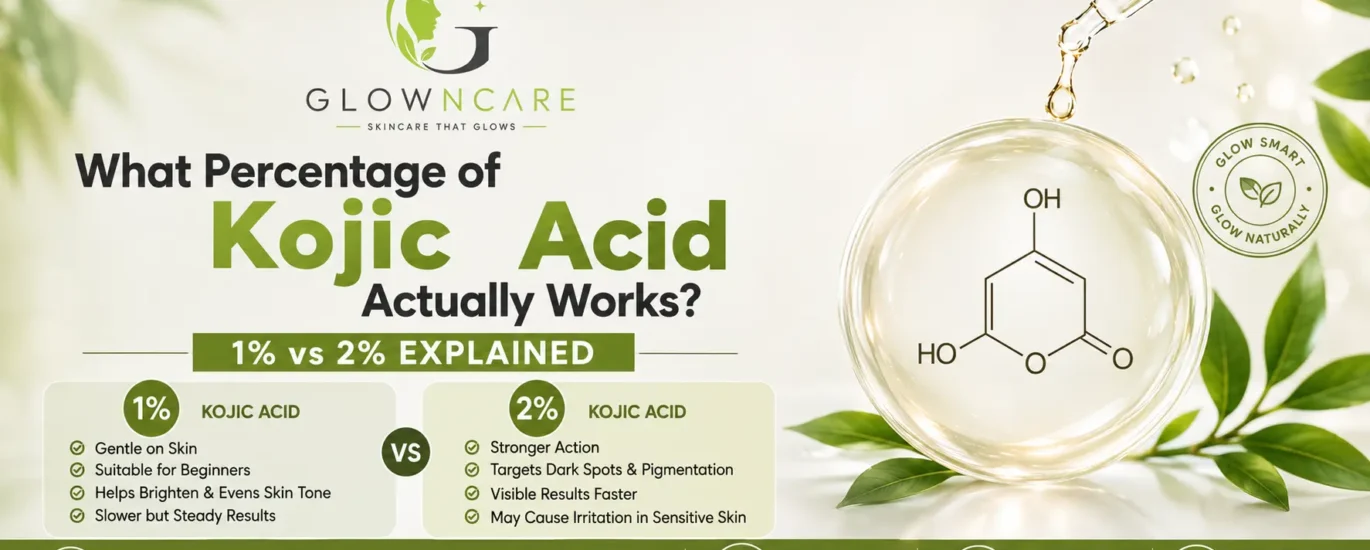
If you’re short on time, here’s what actually matters. 1% kojic acid is the safer, gentler place to begin, especially if your skin is sensitive or you’re trying this ingredient for the first time. 2% is where the real clinical evidence sits, including a 2025 study on Indian women that found it worked about as well as 5% cysteamine for melasma, without notable side effects. Going higher than 2% doesn’t get you better results, it mostly just raises your chances of irritation, so more isn’t the goal here.
The format matters just as much as the percentage. A rinse off face wash can safely carry a bit more kojic acid than a leave on serum, simply because it’s not sitting on your skin for hours. That’s why easing in with something like a 1% face wash, then working up to a 2% serum only if you need it, tends to be the smartest and most skin respecting approach, particularly for Indian skin dealing with heat, humidity and higher UV exposure.
And a genuinely useful thing to keep in mind: percentages on a label aren’t the whole story. Formulation quality, pH balance, and whether a brand is transparent about what’s actually in the bottle matter just as much as the number printed on the front. That’s really the throughline of this whole guide, go gentle, be consistent, and choose products you can actually trust rather than chasing the highest percentage you can find.
Introduction
If you’ve spent even ten minutes scrolling through skincare products, you’ve probably noticed kojic acid listed as “1%” on one bottle and “2%” on another, with no real explanation of what that difference means for your skin. So let’s get the short answer out of the way first. 1% kojic acid is a gentle, beginner friendly starting point, especially if you have sensitive skin. 2% is the concentration with the strongest clinical backing, particularly for melasma. And going beyond 2 to 4% doesn’t actually get you better results, it just raises your chances of irritation. The right kojic acid percentage for your skin also depends a lot on whether you’re using a rinse off face wash or a leave on serum, and that’s the part most articles conveniently skip. Let’s walk through it properly.
What Kojic Acid Percentage Actually Means
Kojic acid works by interrupting an enzyme called tyrosinase, which your skin relies on to produce melanin, the pigment behind dark spots, tanning and uneven tone. Picture tyrosinase as a factory worker and kojic acid as something that ties up that worker’s hands using copper. With less copper available, the worker simply can’t do the job as well, so your skin ends up producing less pigment.
Here’s the part most brands never explain. This process has a ceiling. Once kojic acid has taken up enough of that copper binding activity, adding more of it stops making a meaningful difference. Doubling the percentage on a label does not mean you get double the brightening. It behaves more like a curve that flattens out than a straight line. This is really the heart of understanding kojic acid percentage for skin, and it’s exactly why the “more is always better” logic doesn’t hold up here the way it might with other actives.
1% Kojic Acid: Who It’s For and What to Expect
1% is recognised as a safe cosmetic concentration by the CIR panel, the body that reviews cosmetic ingredient safety data. That makes it a sensible starting point if any of the following sound like you.
You’re completely new to kojic acid and haven’t used it before Your skin tends to react easily to actives, which makes it a solid choice for kojic acid strength for sensitive skin You’re dealing with general dullness or mild discoloration rather than deep, stubborn pigmentation You simply want a low risk way to see how your skin responds before going stronger
At this strength, most people start noticing visible improvement in tone and dullness somewhere between 8 and 12 weeks of consistent use. It takes patience, but it’s also much gentler on your skin barrier, and it comes with a lower kojic acid percentage side effects profile compared with jumping straight to 2%.
2% Kojic Acid: Who It’s For and What the Research Shows
2% is where the clinical evidence really starts to get interesting, and it’s directly relevant if you’re trying to understand kojic acid concentration for melasma. A study published in Cureus in March 2025 followed 72 Indian women over 16 weeks, comparing 2% kojic acid against 5% cysteamine, another well known pigmentation ingredient. The results showed that 2% kojic acid reduced melasma severity by around 10%, performing comparably to the much higher concentration of cysteamine, with no significant adverse effects reported.
That’s a genuinely meaningful finding for Indian skin specifically, since most kojic acid research circulating online is either outdated or based on skin types very different from ours. If you’ve been wondering is 2% kojic acid is better than 1%, honestly, it depends on what you’re treating. For confirmed melasma, moderate pigmentation, or dark spots that haven’t budged with gentler options, and for skin that has already shown it tolerates actives well, 2% is where the stronger evidence sits. A lot of people also ask is 2% kojic acid safe for daily use, and for skin that’s already built up some tolerance, the answer is generally yes, though it’s still best to work up to it gradually rather than starting there.
Why Higher Percentage Doesn’t Mean Better Results
This is the part almost nobody explains clearly, and it directly answers a question we hear often: is higher percentage kojic acid always better. With ingredients like Vitamin C or retinol, going up in strength often does translate into faster or more visible results, within reason. Kojic acid just doesn’t work that way. Once you cross the 2% mark, you’re not getting proportionally better pigmentation control, you’re mostly just increasing your chances of redness, dryness and irritation. So if you come across a product marketed as “5% kojic acid” and promising faster results, it’s worth treating that claim with a healthy dose of skepticism.
Face Wash vs Serum vs Soap vs Cream: Does the Percentage Even Mean the Same Thing?
This is genuinely one of the most overlooked points when people compare kojic acid face wash percentage vs serum percentage, and it matters more than most realise.
A face wash or soap sits on your skin for maybe 30 to 90 seconds before you rinse it off. A serum or cream, on the other hand, stays on your skin for 8 hours or more, often through the whole night. That difference in contact time changes how much of the active your skin actually absorbs, and how much irritation risk you’re exposed to along the way.
Because of this, rinse off products can safely carry a slightly higher concentration, up to around 2.5%, since the product simply isn’t on your skin long enough to cause real irritation. This is also why kojic acid soap percentage tends to run a little higher than what you’d find in a serum. Leave on products like serums and creams should generally stay within the 1 to 2% range, since prolonged contact raises the risk of sensitivity.
Why the Lotus DermaBotanics Kojic Acid + Multi Berry Blemish-Free Facewash Is Worth Considering
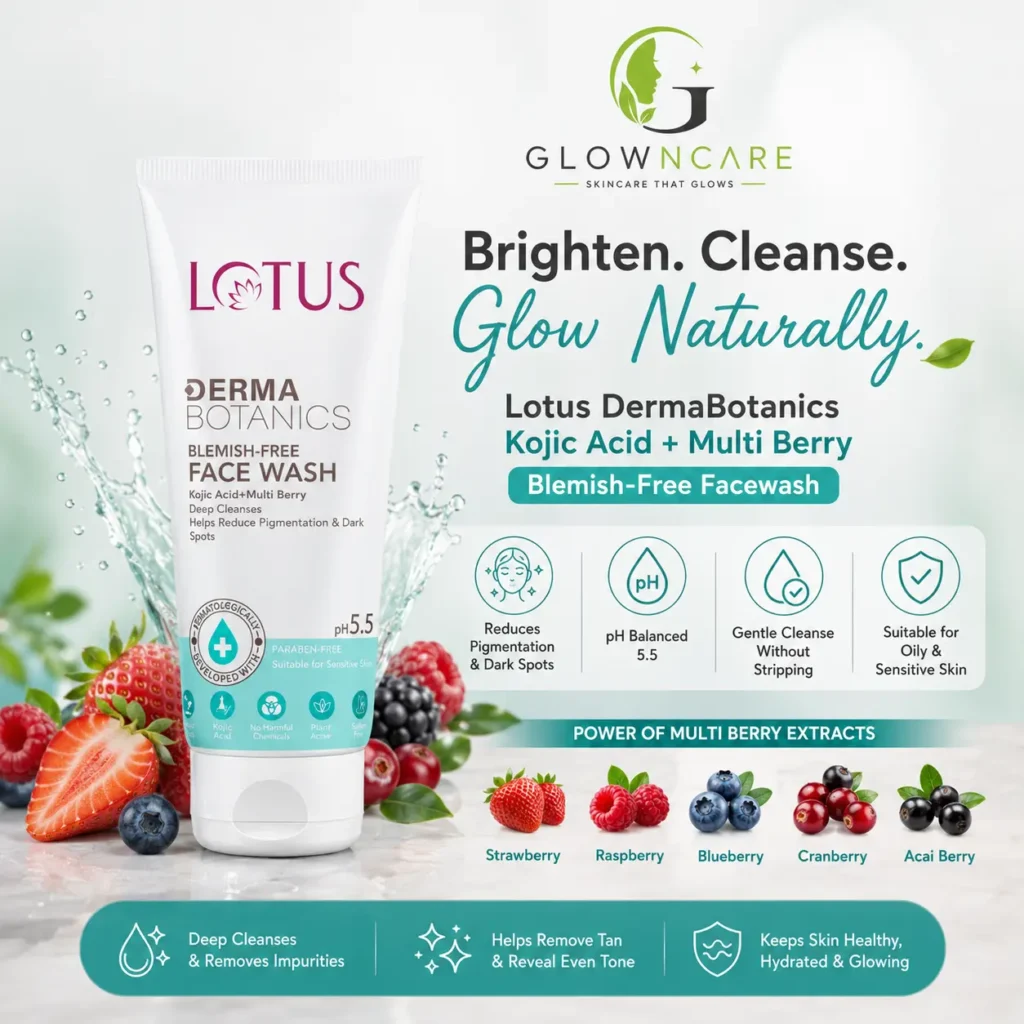
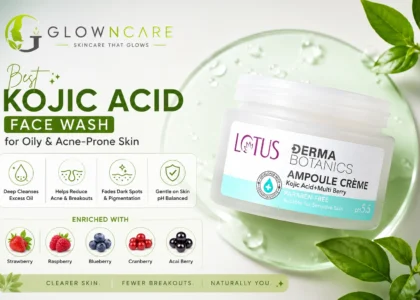
If everything above has you thinking a rinse off product makes the most sense for where you’re starting out, the Lotus DermaBotanics Kojic Acid + Multi Berry Blemish-Free Facewash is one worth actually paying attention to, not just another face wash riding the kojic acid trend. What stands out is that it’s built around the same logic this whole article is based on, using kojic acid in a format designed for shorter contact time, rather than slapping a percentage on the label and hoping people don’t ask questions.
It’s developed with dermatologist guidance and formulated to address pigmentation, dark spots and acne, which honestly covers most of what people are looking for the moment they start comparing kojic acid products in the first place. It’s also sulfate free and maintains a pH of 5.5, and that detail matters more than it might seem at first glance. Your skin naturally sits on the slightly acidic side, so a face wash that respects that balance helps keep your barrier intact instead of stripping it. That means less dryness, less irritation, and less chance of your skin overcompensating by producing excess oil. A barrier that’s kept in good shape also means everything else in your routine, your serums, your moisturiser, actually gets to do its job properly afterward.
What we genuinely appreciate is that it doesn’t rely on kojic acid alone. The formula brings in a full lineup of berry extracts, each doing something specific. Strawberry Extract, rich in vitamin C, helps brighten skin and refine the look of pores. Raspberry Extract calms redness and irritation thanks to its anti inflammatory properties, which is reassuring if your skin tends to react easily. Blueberry Extract supports your skin’s natural collagen production, Cranberry Extract brings natural antiseptic benefits that help with acne, and Acai Berry Extract is known for supporting skin repair and fighting early signs of ageing. Put together with kojic acid, this isn’t just a spot treatment in disguise, it’s a formula that supports your skin’s overall health while it works.
It’s also designed to cleanse without that tight, stripped feeling you sometimes get from active ingredient face washes. It holds onto hydration even while doing its job, and it’s positioned as suitable for both oily and sensitive skin, which genuinely matters for anyone in India dealing with humidity and higher oil production for most of the year. Used twice a day, it also helps with tan removal by gently clearing away dead skin cells and impurities to reveal a more even tone underneath.
If you’re following the patch test approach we walked through earlier, this is a natural place to begin. It sits safely in that shorter contact time, lower risk category of rinse off products, giving your skin a genuine chance to adjust to kojic acid before you ever consider stepping up to a leave on serum at a higher percentage.
Which Percentage Is Right for Indian Skin and Climate
This is where a lot of global skincare advice quietly falls short, especially for anyone searching for the right kojic acid percentage for Indian skin. Most of India’s population falls under Fitzpatrick skin types III to V, meaning a higher baseline melanin level. Skin in this range is more prone to post inflammatory hyperpigmentation, which basically means that if your skin gets irritated, it’s more likely to leave behind a dark mark, sometimes worse than the pigmentation you were originally trying to treat.
Add in India’s heat, humidity and high UV index, and you’ve got a combination where photosensitivity and irritation control genuinely matter more here than in cooler, lower UV markets. This is exactly why going gentle first, and only stepping up to 2% once your skin has proven it can handle kojic acid well, tends to be the smarter approach for most Indian skin types rather than reaching straight for the highest percentage you can find. It’s also part of why the best kojic acid percentage for oily skin India often leans toward rinse off formats first, since oily, humid conditions paired with a leave on product can sometimes push irritation risk higher.
Can You Combine a 1% Face Wash and a 1% Serum? Does It Add Up to 2%?
This is a common assumption, and it’s not accurate. Percentages from different products don’t simply stack together into one combined total. A 1% face wash and a 1% serum don’t equal “2% kojic acid” on your skin, because contact time, formulation, and how much product actually stays on your skin all affect real absorption. If anything, layering two kojic acid products together raises irritation risk without offering any predictable extra benefit. If you do want to use both a rinse off and a leave on product, it’s safer to introduce them one at a time and watch how your skin responds, rather than assuming the numbers just add up.
Kojic Acid vs Niacinamide: Do the Percentages Compare the Same Way?
This is another point that trips people up. Niacinamide is typically used at concentrations between 2% and 10%, and it works through a completely different mechanism. It doesn’t inhibit tyrosinase the way kojic acid does, instead it helps regulate oil production, strengthens the skin barrier and reduces inflammation, with brightening showing up as a secondary benefit. Because of this, you really can’t compare kojic acid vs niacinamide percentage directly. A 2% kojic acid product and a 2% niacinamide product aren’t doing the same job at the same intensity. Plenty of people use both together, since they approach pigmentation from different angles, but it helps to know that the numbers on the label aren’t measuring the same kind of strength.
Cost, Percentage Claims and Why Label Transparency Matters in India
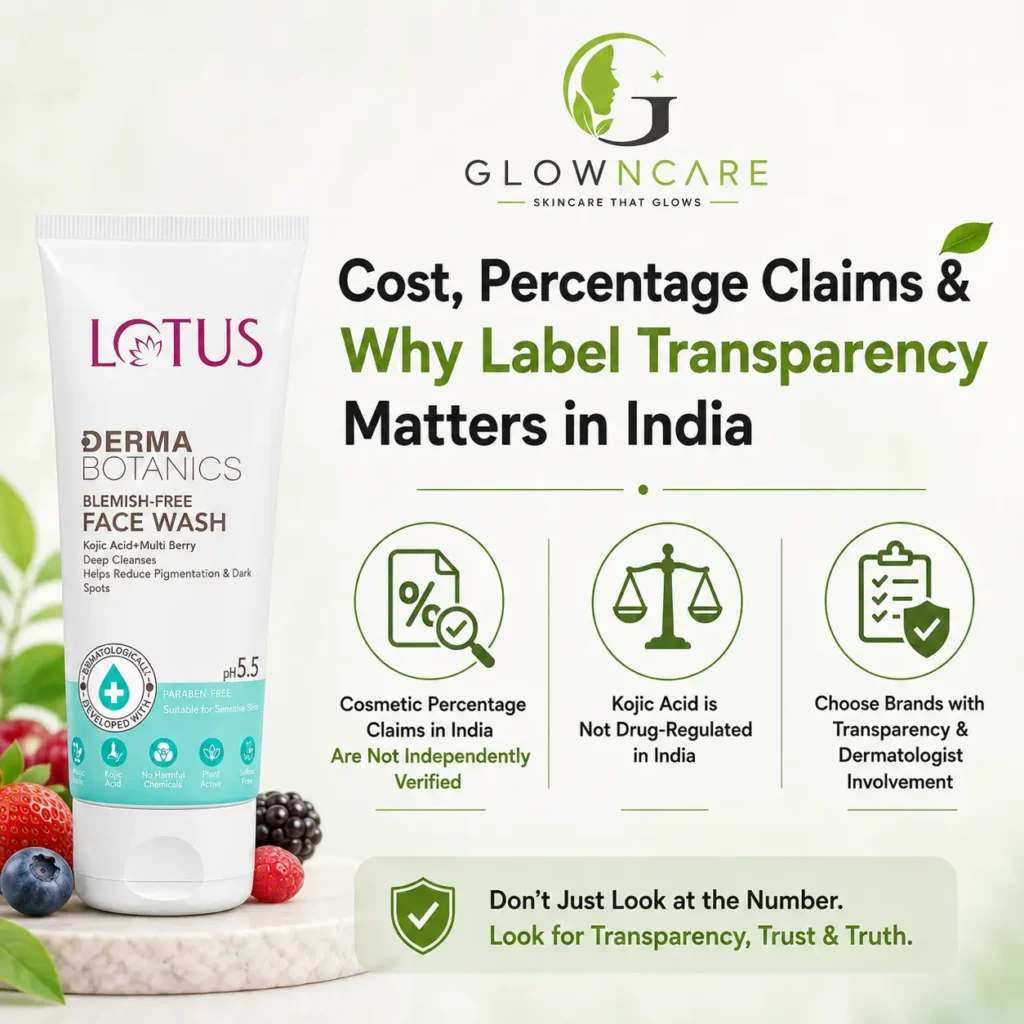
Here’s something worth knowing before you spend extra money chasing a higher number on a label. Cosmetic percentage claims in India aren’t always independently verified, which means some products claiming “2% kojic acid” may not actually contain that concentration in any meaningful, tested form. This ties into a bigger question many Indian buyers have, which is whether kojic acid percentage is regulated in India the way drug ingredients are. Cosmetic actives like kojic acid fall under cosmetic claim guidelines rather than strict drug level regulation, and that’s exactly why label transparency and dermatologist involvement in formulation matter so much. Before paying a premium for a higher percentage claim, it’s worth choosing brands that are upfront about their formulation and ideally developed with dermatologist guidance, rather than picking based purely on the number printed on the front of the bottle.
How to Patch Test and Introduce Kojic Acid Safely
Jumping straight into daily use of any new active isn’t the best approach, especially with pigmentation focused ingredients. A simple, safer way to bring kojic acid into your routine looks something like this.
Start with a 1% rinse off product like a face wash, used around 3 times a week If your skin shows no redness, irritation or dryness after about 2 weeks, move to daily use After roughly 4 weeks of tolerating daily 1% use, you can consider introducing a 2% leave on product like a serum if you’re targeting more stubborn pigmentation Always patch test any new product on a small area first, and always follow up with sunscreen during the day, since kojic acid can increase sun sensitivity
Side Effects, Pregnancy and Safety Notes
Kojic acid is generally considered safe at cosmetic concentrations, but like most active ingredients, it isn’t completely risk free for everyone. Some people notice mild redness, dryness or irritation, especially when they’re just starting out or using it more frequently than their skin can comfortably handle. If you’re pregnant, breastfeeding, or managing a diagnosed skin condition, it’s worth checking in with a dermatologist before adding kojic acid to your routine, since personal guidance matters far more than generic advice in these situations.
Frequently Asked Questions
Can I use 1% and 2% kojic acid together?
You can, but the percentages don’t simply add up. It’s safer to introduce one product at a time and watch how your skin reacts rather than combining both from day one.
Is 2% kojic acid safe for daily use?
For most people who have already built tolerance to kojic acid, yes. But it’s best to work up to 2% gradually rather than starting there.
How long does 1% kojic acid take to show results?
Most people notice visible changes in tone and dullness somewhere between 8 and 12 weeks of consistent use.
Which is better, kojic acid or vitamin C, for dark spots?
They work differently. Vitamin C brightens and offers antioxidant protection, while kojic acid goes directly after the enzyme responsible for pigment production. Many people use both, at different times of day, rather than picking one over the other.
Is higher percentage kojic acid always better?
No. Past around 2%, results plateau while irritation risk keeps climbing, so higher isn’t automatically more effective.
Is kojic acid banned in any country?
Some countries have restricted kojic acid in certain leave on formulations following safety reviews, though it remains widely used in cosmetic products globally at regulated concentrations. If this is a specific concern for you, it’s worth checking current regulations in your region before use.
Can pregnant women use kojic acid?
This is best discussed directly with a doctor or dermatologist, since individual skin and health factors vary from person to person.
About the Author
This article is brought to you by the team at Glowncare, a space built around one simple idea: skincare advice should make sense before it makes a sale. We spend our time digging through actual research, ingredient studies and dermatology insights so you don’t have to sift through marketing claims to figure out what’s real. No exaggerated promises, no pushing you toward the priciest option, just honest, well researched guidance you can actually rely on.
Everything we write is fact checked against current studies and cross referenced with dermatologist backed sources, especially when it comes to actives like kojic acid where percentages and claims can get confusing fast. Our goal isn’t to tell you what to buy, it’s to help you understand your own skin well enough to make that decision yourself.
Got a question this article didn’t answer, or want us to break down another ingredient the same way? Reach out to us at Glowncare, we’re always happy to dig deeper.
Conclusion
At the end of the day, there’s no single “correct” kojic acid percentage that works for every person, every skin type, or every concern. What actually matters is pairing the right percentage with the right product format, being honest with yourself about how your skin tolerates actives, and staying clear on what you’re actually trying to fix, whether that’s mild dullness or more stubborn pigmentation.
If you’re just getting started, easing in with a gentle rinse off option like the Lotus DermaBotanics Kojic Acid + Multi Berry Blemish-Free Facewash is a genuinely smart way to introduce kojic acid without putting your skin barrier at risk. It brings together a safe, well judged percentage, a dermatologist guided formulation, a skin friendly pH, and a sulfate free base, all supported by a lineup of berry extracts that brighten, calm and care for your skin at the same time. It’s the kind of product that lets you build trust with an ingredient before committing to anything stronger.
And that’s really the takeaway here. Patience wins over speed with kojic acid. Let your skin set the pace, watch how it responds, and only step up to a higher percentage or a leave on serum once you’ve given it a fair chance to prove it can handle what’s already in your routine. Skincare that actually works is rarely about doing the most, it’s about doing the right thing, consistently, for your own skin.
Related Blog – https://glowncare.com/best-kojic-acid-face-wash-for-oily-acne-prone-skin/
For More Info Contact Us