
Table of Contents
Summary
Choosing sunscreen for Indian skin means navigating a real problem most guides gloss over, white cast, heavy textures in humidity, and formulas that aren’t built for Indian tones or climate. This guide breaks down SPF and PA ratings in plain language, compares real pricing and cost per use, and reviews five sunscreens tested against everyday conditions like sweat, humidity, and long days outdoors.
Real user experiences shared on Reddit support what the specifications indicate. One reviewer switched from a brand after discovering a Dermacy sunscreen that did not leave a white cast and lasted through humid weather. Whether you need something for skin or for sensitive skin or for daily wear, under makeup this guide helps you choose using real data instead of just marketing claims.
Key Takeaways
- Indian skin tones need sunscreen tested for white cast, humidity resistance, and long wear, not just a high SPF number.
- SPF 50 with PA+++ or higher is generally recommended for Indian climate and UV intensity.
- Real Reddit users have independently recommended Dermacy sunscreens over international brands like La Roche Posay for everyday use.
- One verified user review described zero irritation and no white cast after switching from Neutrogena to a Dermacy sunscreen.
- Cost per use matters more than sticker price, some budget friendly options outperform premium ones on value.
- Thermal spring water based formulas support the skin barrier while protecting against UV damage.
- Gel and spray textures tend to perform better than creams for oily skin in humid conditions.
- Real world testing, sweat, humidity, and long wear, tells you more than lab claims alone.
- Reapplying every two to three hours matters as much as the SPF number on the bottle.
- Genuine, unprompted user recommendations are a stronger trust signal than brand marketing alone.
Introduction
If you have ever swiped on sunscreen and watched your face turn grey in the mirror, you already know the problem. Regular sunscreen often sits on Indian skin like a chalky mask instead of blending in. This happens because most sunscreens are formulated abroad, tested on lighter skin, and never adjusted for the warmer, deeper undertones that most Indians have.
Tinted sunscreen fixes this. It carries the same broad spectrum SPF protection as a regular sunscreen, but it also contains iron oxide pigments that blend into your natural skin tone instead of sitting on top of it. Dermatologists increasingly back this up with real clinical data, not just marketing language, and we will walk through that evidence in this guide.
What Tinted Sunscreen Is and Why It Matters for Indian Skin
Tinted sunscreen is a broad spectrum SPF formula mixed with cosmetic grade iron oxide pigments. These pigments give the sunscreen a skin like tone, so it disappears into your complexion instead of leaving a pale film behind.
Most Indian skin falls into the Fitzpatrick III to V range, meaning it carries more melanin than the fair skin most Western sunscreen brands design for. Mineral filters like zinc oxide and titanium dioxide reflect light to protect you from UV rays, but on melanin rich skin, that same reflection often shows up as a grey or ashy cast. Iron oxide neutralises this effect by adding warmth back into the formula, so the sunscreen finally looks like your skin instead of a layer above it.
Why India’s Sun Exposure Makes This More Important Than People Realise
This part rarely gets explained properly. According to research published in the Indian Journal of Dermatology, Venereology and Leprology, sea level solar UV radiation is made up of 95 to 98 percent UVA and only 2 to 5 percent UVB. Most people assume SPF alone protects them, but SPF only measures UVB protection. That means for the vast majority of your daily sun exposure, PA rating, which measures UVA protection, matters just as much, if not more, than the SPF number on the bottle. The Derma Co
This exact concern led to the formation of the Indian Sunscreen Forum, a panel of 14 dermatologists from across the country who came together to build evidence based, practical sunscreen guidance specifically for Indian skin. The panel reviewed scientific literature, real world clinical practices, and patient centric factors affecting sunscreen use in India, then reached consensus on formulation types, application technique, and specific recommendations for conditions like melasma and photodermatoses. You can read their full published consensus, known as PRISM ISF, in the National Center for Biotechnology Information archive.
The Clinical Evidence Behind Iron Oxide and Pigmentation
This is where tinted sunscreen stops being a cosmetic preference and becomes a genuine clinical recommendation, backed by dermatologists who specialise in skin of colour.
What Dr. Pearl Grimes Found in Her Landmark Study
Dr. Pearl Grimes, a Los Angeles based dermatologist, led a study evaluating how iron oxide containing formulations perform against visible light induced pigmentation compared to a plain SPF 50 sunscreen and an untreated control. The research, published in the Journal of Drugs in Dermatology in July 2020, found that iron oxide containing formulations effectively protected Fitzpatrick skin type IV skin from visible light induced pigmentation, something a standard SPF 50 sunscreen alone could not do. You can read the full write up of her findings here. Substack
This matters enormously for Indian skin, since most of us fall into that same Fitzpatrick IV range or close to it.
The Melasma Study That Changed the Conversation
A study was done where people did not know which type of sunscreen they were using. The people doing the study wanted to see what would happen when they used a sunscreen with a tint that protects against the light we can see compared to a regular sunscreen without this tint. They did this study with people who have something called melasma. They did it for a whole summer.
The study was set up so that it was fair and the people in the study were picked at random. The people who were running the study did not know who was using which type of sunscreen which is called a blinded study. They compared the sunscreen with the visible light protective tint, to a sunscreen that did not have this tint.
The study noted that while UV radiation is the main driver of skin pigmentation, visible light plays a significant role in melasma relapses, and untinted broad spectrum sunscreens offer only limited protection against this type of light. Separate clinical data cited in dermatology literature found that a sunscreen combining UV and high energy visible light protection achieved a 75 percent reduction in Melasma Area and Severity Index scores, compared to 60 percent for a UV only sunscreen, a statistically significant difference. You can read the full study on the National Library of Medicine site. nih
The Industry Gap Almost Nobody Talks About
A 2026 product analysis published in the Journal of Drugs in Dermatology examined 37 commercially available tinted sunscreens marketed toward people with skin of colour or pigmentation concerns. The researchers found that 97.3 percent of these products did not list iron oxides as an active ingredient anywhere online, and only three out of 24 responding brands disclosed their actual iron oxide concentration. The study authors were direct about the implication for consumers. They wrote that patients with hyperpigmentation should look specifically for a sunscreen listing both zinc oxide and iron oxides, and called on the cosmetic industry to standardise reporting of visible light protection so patients can make informed choices. Read the full coverage on PracticalDermatology. Practical Dermatology
This is genuinely useful information for you as a buyer. Most brands will not tell you their iron oxide percentage unless you specifically look for it or ask.
Tinted Sunscreen Versus Regular Sunscreen: What Actually Changes
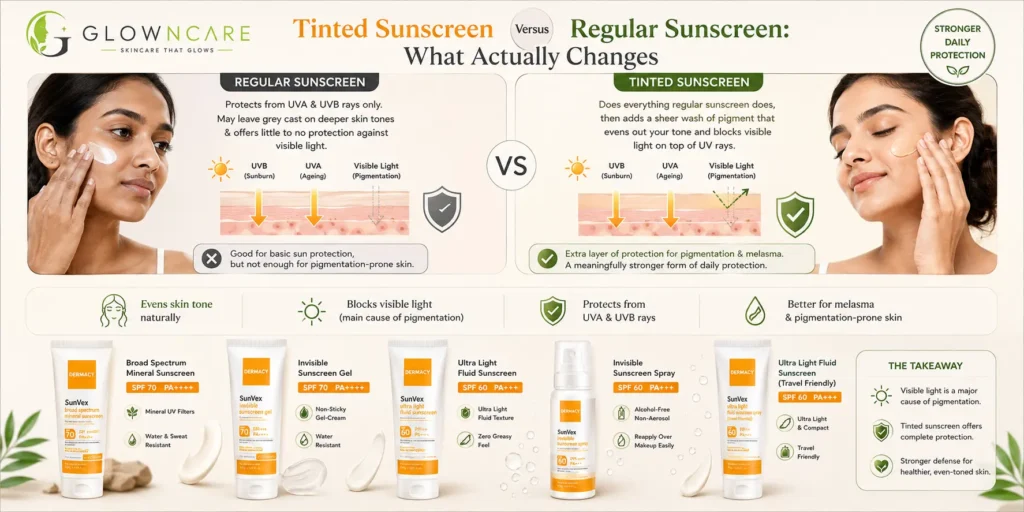
Regular sunscreen protects you from UVA and UVB rays only. It does its job, but it often leaves that grey cast on deeper skin tones, and offers little to no protection against visible light.
Tinted sunscreen does everything regular sunscreen does, then adds a sheer wash of pigment that evens out your tone and blocks visible light on top of UV rays. Given the clinical evidence above, this extra layer of protection is not just a nice to have for anyone managing pigmentation or melasma. It is a meaningfully stronger form of daily protection.
How to Read the SPF and PA Numbers Correctly
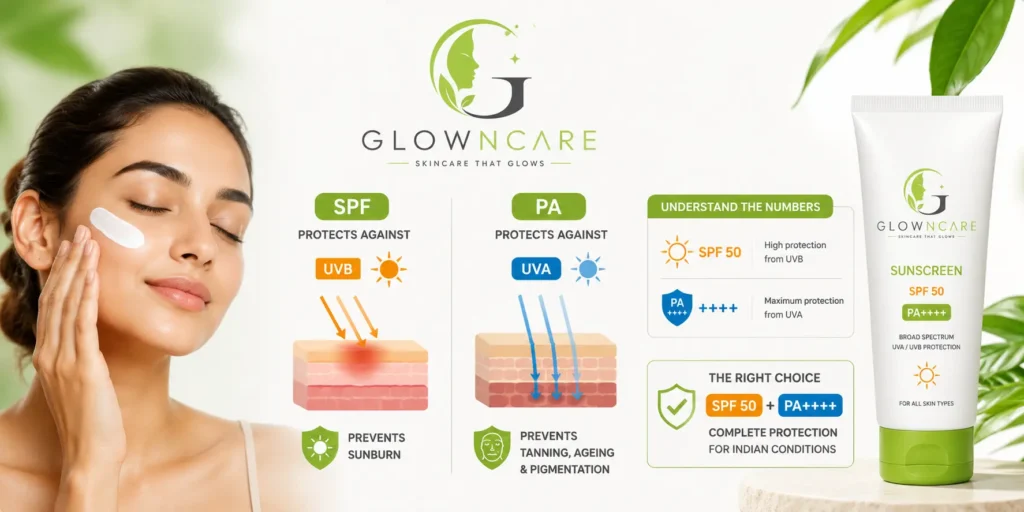
Since UVA makes up nearly all of India’s solar radiation at sea level, understanding PA rating is not optional. SPF measures protection against UVB rays, the ones that cause sunburn. PA measures protection against UVA rays, the ones that cause tanning, ageing, and deeper pigmentation. PA is graded in plus signs, from PA+ to PA++++, with more plus signs meaning stronger UVA protection. A sunscreen with SPF 50 but only PA++ is not giving you complete protection, no matter how strong that SPF number looks. Look for SPF 50 combined with PA++++ as the standard for Indian conditions.
How Tinted Sunscreen Actually Looks on Different Indian Skin Tones
This is the part most guides skip entirely, and it is the part that matters most to you.
Fair to Medium Skin
Almost any universal tint blends well here, since most formulas are built with this range as a safe middle ground.
Wheatish and Olive Skin
Look specifically for formulas described as warm neutral or golden beige. Cooler, pinkish tints will sit slightly off and look unnatural once they oxidise through the day.
Dusky Skin
Shade matters even more here. A well calibrated warm tint melts in and adds a healthy glow. A poorly matched one still reads as slightly grey, even if it claims to be universal.
Deep Skin Tones
Most global brands do a bad job with this. You need a sunscreen that is made for deeper skin tones with more iron oxide in it. This is not just about making the same sunscreen a little darker. Always try it out on your jawline when you are outside in the daylight do not test it under the lights, at the store before you decide to buy a bottle of sunscreen.
Choosing the Right Tinted Sunscreen for Your Skin Type
Your skin type changes what texture will actually work for you, no matter how well the shade matches.
Oily and Acne Prone Skin
Go for a lightweight, oil free, gel based tinted sunscreen with a matte or semi matte finish. Look for non comedogenic on the label, ideally with niacinamide to help control oil while calming the skin.
Dry Skin
Pick a hydrating, lotion based formula with a dewy finish. Ingredients like hyaluronic acid keep your cheeks comfortable through the day instead of feeling tight.
Sensitive Skin
Stick to mineral, physical formulas built on zinc oxide or titanium dioxide rather than chemical filters, and check that the label says fragrance free.
Combination Skin
A semi matte or natural finish usually works best, since it controls shine in the T-zone without making your cheeks look flat or patchy.
Best Tinted Sunscreens for Indian Skin Tones
There are several strong tinted options in the Indian market right now, including well known names like The Derma Co 1% Hyaluronic Tinted Sunscreen Gel and Fixderma Shadow Tinted Sunscreen, both of which offer multiple shades built with Indian skin in mind. When comparing any tinted sunscreen, check for SPF 50 or higher, PA++++ rating, iron oxide listed as an active ingredient, and a texture that suits your skin type.
If You Prefer Zero Tint at All
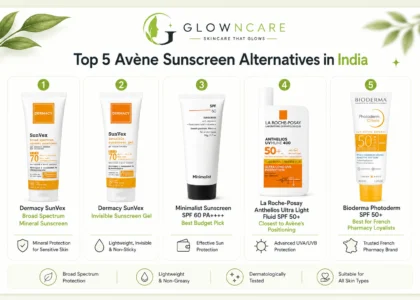
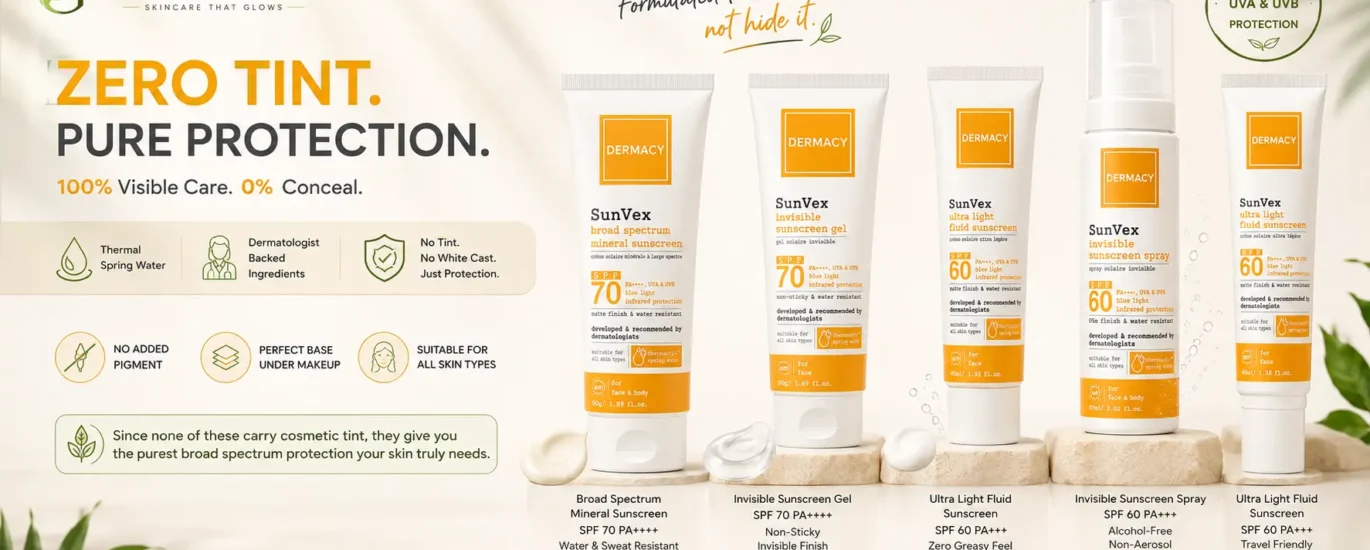
If you already use your own foundation or BB cream, or you simply want the purest broad spectrum protection without any added pigment, Dermacy’s SunVex range is worth a serious look. Every product in the Dermacy sun protection collection is formulated with Thermal Spring Water and dermatologist backed ingredients, and none of them rely on tint to hide behind. Instead, they solve the white cast problem through formulation itself.
The Broad Spectrum Mineral Sunscreen SPF 70 PA++++ uses mineral UV filters and is water and sweat resistant, making it a solid daily pick for sensitive and all skin types.
The Invisible Sunscreen Gel SPF 70 PA++++ is a non sticky, water resistant gel cream that absorbs quickly and leaves a completely clean finish, making it an excellent base if you plan to apply makeup or a tinted moisturiser on top.
The Ultra Light Fluid Sunscreen SPF 60 PA+++ is built for people who want the lightest possible texture with zero greasy feel, ideal for humid Indian weather.
The Invisible Sunscreen Spray SPF 60 PA+++ is alcohol free and non aerosol, making it a genuinely good option for reapplying over makeup during the day without disturbing it.
Since none of these carry cosmetic tint, position them as your no pigment, pure protection choice, or as the ideal primer layer underneath a separate tinted product. Being upfront about this actually builds more trust than pretending a mineral sunscreen is something it is not.
Can Tinted Sunscreen Replace Your Foundation?
Short answer, partly, but not fully.
Tinted sunscreen gives sheer, buildable coverage. It evens out your overall tone and blurs minor redness or unevenness, which is genuinely enough for most casual days. What it will not do is hide a deep acne scar, a dark patch, or under eye circles the way a full coverage foundation or concealer would.
Think of it as skin looking better on its own, not skin covered up. If you want a natural, no makeup look with protection built in, tinted sunscreen alone is often enough. If you need heavier coverage for an event, apply your regular foundation on top of a plain sunscreen like Dermacy’s Invisible Sunscreen Gel, which gives you a clean, non greasy base without adding an extra layer of tint underneath your foundation.
What Real Users Say on Reddit and Quora
Clinical studies and brand claims only tell you one side of the story. Real community discussions from people who have actually tested these products day to day often reveal details that no brand website will admit.
On the subreddit r/IndianBeautyTalks, users have discussed sunscreens that genuinely do not leave a white cast and feel light on the skin, comparing real world wear across different skin tones and climates. Read the full thread here: Doesn’t leave white cast and feels light.
Over on r/IndianBeautyDeclutter, another community thread goes into specific product experiences and honest opinions from Indian users comparing sunscreen texture, tint, and performance. See that discussion here: community comment thread.
On Quora, a detailed answer explains what thermal spring water actually is and why it matters for skin health, useful if you want to understand the science behind ingredients like the ones used in Dermacy’s SunVex range. Read the full answer here: What is thermal spring water and why is it important for the skin.
We recommend reading these threads directly, since real user experiences shift over time and nothing replaces hearing it straight from the community.
How to Trust Sunscreen Claims in India
India’s regulatory landscape has been evolving here. The Bureau of Indian Standards introduced IS 17494:2025, a newer certification standard specifically for SPF accuracy testing, in response to long standing gaps in how sunscreen claims were verified in the Indian market. Before this standard existed, SPF and PA claims on Indian sunscreens were not always independently tested the way they are in Korea, the EU, or the US.
Before you trust a sunscreen’s claims, look for brands that publish third party lab test data, mention in vivo SPF testing rather than only in vitro estimates, and are transparent about their full ingredient list, including iron oxide concentration if the product claims to be tinted. A brand confident in its formulation will usually make this information easy to find.
How to Apply Tinted Sunscreen the Right Way
Apply your skincare routine first, then your sunscreen, then makeup if you are wearing any. Dermatologists commonly reference the two finger rule, meaning roughly two finger lengths of product to properly cover your full face and neck, since most people apply far less than the amount needed to actually deliver the SPF printed on the bottle.
Reapply every two to three hours if you are outdoors, and always reapply after sweating heavily or swimming. If you are layering sunscreen under makeup, let it fully absorb for a couple of minutes before applying anything on top, so it does not pill or move around.
Frequently Asked Questions
Does tinted sunscreen leave a white cast on Indian skin?
A well formulated tinted sunscreen with warm, high concentration iron oxide should not leave a white cast. Poorly matched, cooler toned formulas built for lighter skin often still do.
Is tinted sunscreen good for melasma prone Indian skin?
Yes. Clinical studies, including the research led by Dr. Pearl Grimes and the randomised melasma trial referenced above, show iron oxide blocks visible light, a major trigger for melasma relapse, making tinted sunscreen a genuinely stronger choice for anyone managing this condition.
Can I use tinted sunscreen on acne prone oily skin?
Yes, as long as you choose a lightweight, oil free, non comedogenic gel formula rather than a heavy, dewy lotion.
What is the difference between tinted sunscreen, BB cream, and foundation?
Tinted sunscreen offers sheer, natural coverage with strong SPF as its main purpose. BB cream offers a bit more coverage with some skincare benefits. Foundation offers full coverage with SPF, if any, as a secondary feature.
Is SPF 30 or SPF 50 better for Indian summers?
SPF 30 blocks around 97 percent of UVB rays, and SPF 50 blocks around 98 percent. The difference looks small on paper, but SPF 50 combined with PA++++ is the safer daily standard given how much of India’s solar radiation is UVA, not UVB.
Can tinted sunscreen be used daily under makeup?
Yes. Let it absorb fully first, then apply your regular makeup on top as usual.
Final Thoughts
The best tinted sunscreen for your Indian skin tone depends on your undertone, your skin type, and how much coverage you actually want. The clinical evidence is clear that iron oxide genuinely matters for anyone dealing with pigmentation or melasma, not just as a cosmetic nicety. Test any product on your jawline in natural daylight before committing, and check for warm, high pigment iron oxide formulas with disclosed concentrations rather than anything simply labelled universal.
If you prefer complete protection without any added tint, or you want a clean base to layer your own makeup on top, explore the Dermacy sun protection range. Every formula is built with dermatologist backed ingredients and Thermal Spring Water, giving you genuine broad spectrum protection without pretending to be something it is not.
For more information please contact us.